
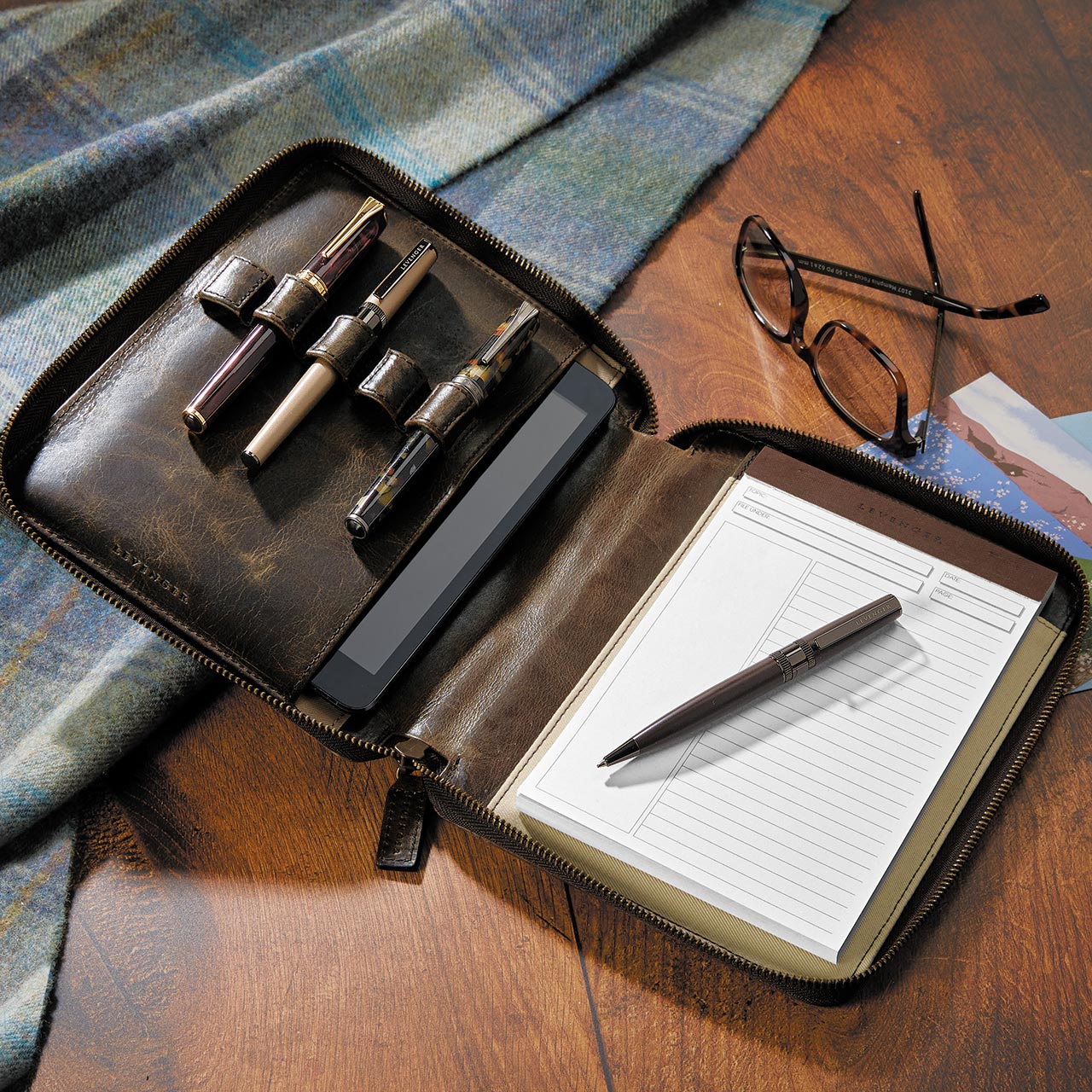
Most people don’t need a life without screens; they need days with edges. The edges come from choosing when to be fully online and when to work and read on paper. This Core Guide shows how to design that balance with refined, analog tools from Levenger—discbound Circa notebooks, Freeleaf planner pads, index cards, lap desks, the Library Stand, and reading lights—so you can reduce screen fatigue, think clearly, and make steady progress on the work that matters.
You’ll find field‑tested routines for mornings, deep work, meetings, commutes, campus life, reading before bed, and weekend resets. We’ll compare paper formats side‑by‑side, explain where each tool shines, and suggest smart, portable kits that hold their own in conference rooms, cafés, dorms, and library stacks. Along the way, you’ll see contextual links to supporting guides that unpack each routine in greater detail.
Why analog interludes work
Digital tools are powerful—but they’re also designed to capture attention. Analog interludes give it back. Writing on paper narrows inputs to what you choose to put on a page; it slows your thinking just enough to clarify intent; and it creates a visible boundary for decisions. Reading on paper or with a dedicated stand removes the glow that tempts you toward a new tab. Short, screen‑light blocks—25, 45, or 90 minutes—let you reset your nervous system while producing high‑quality work.
Designing a tech‑balanced day is less about discipline and more about environment. You’ll build small, beautiful constraints: a single notepad on the table, a timer beside it, and your phone out of reach. You’ll elevate books to eye level, tilt pages to reduce glare, and light the scene gently. None of this is fussy. It’s craft in service of thinking.
The starter blueprint: a day with edges
Before we explore targeted routines, here’s a simple blueprint you can shape to fit your role, household, semester, or project cadence:
- Begin on paper. Spend 15–20 minutes clarifying priorities before you open a browser. If you want a clear script, see Analog Mornings: A 20‑Minute Paper‑First Routine to Set Your Day’s Focus.
- Schedule one deep‑work block. Run a 45–90 minute focus window without screens. A Circa notebook for project notes, a Freeleaf pad for scratch thinking, and a silent timer is enough. A complete walkthrough lives in Deep Work Without Distractions: Building a Screen‑Free Block with Circa, Freeleaf, and a Timer.
- Hold meetings on paper. Use an annotation‑ruled pad for clean agendas and action capture. To make 1:1s more focused, try the approach in Paper Over Pixels for Meetings: Running Better 1:1s with an Annotation Pad and Pen.
- Use sprints for execution. Work in 25‑minute bursts with a single 3×5 card or to‑do pad. The sprint playbook is in Analog Sprinting: 25‑Minute Task Bursts Using To‑Do Pads and Pocket Briefcases.
- Commute deliberately. If you travel, convert that time to a quiet planning session with a folio and a weekly pad. For a practical setup, see Reclaim Your Commute: Paper Planning in a Briefolio Without Opening a Laptop.
- Close loops before evening. End with a 10‑minute paper shutdown so tomorrow starts calm. The method is outlined in End‑of‑Day Reset: A 10‑Minute Analog Shutdown Using 3x5 Cards and a Desk Tray.
When this scaffolding is in place, you’ll feel the difference within a week: less tab‑grazing, more finished pages, and a steadier sense of progress.
Choosing your core analog kit
Levenger’s system revolves around three primary canvases—discbound Circa pages, Freeleaf pads, and index cards—plus support tools that keep reading comfortable and notes organized. Each format has a character of its own. The aim isn’t to choose one forever; it’s to pick a primary canvas for your day and a secondary canvas that complements it.
Decision matrix: match the tool to the task
Use this compact table to choose a primary canvas and a sidekick based on your work style and setting.
| Option | Best for | Strengths | Tradeoffs | Carry pairing |
|---|---|---|---|---|
| Circa discbound notebook | Projects with moving parts, archival notes, research, multi‑week planning | Rearrange pages; add dividers; archive cleanly; works for meetings + deep work | Slightly heavier than a pad; choices of paper can feel abundant at first | Zip folio or Briefolio; page finders and tab dividers for quick access |
| Freeleaf pad (annotation‑ruled, grid, or weekly) | Meetings, structured thinking, sketch + list on one page, weekly triage | Fast start; tear‑off pages; generous writing feel and margin cues | Loose sheets need a home; not ideal for long‑term archiving without a folder | Padfolio for desk or travel; file pockets for action pages |
| 3×5 index cards | Quick capture, 25‑minute sprints, portable research, sorting/prioritizing | Forces brevity; rearrangeable; easy tactile Kanban | Small canvas; can scatter if you don’t give them a tray or pocket | Desk card stand + slim pocket carrier; tabs for themes |
| Lap desk and stand (reading support) | Long reads, editing printouts, studying from heavy texts | Elevates pages; reduces neck and wrist strain; stable surface anywhere | Another item to carry; choose size and weight thoughtfully | Backpack or tote; pairs with a compact light |
| Reading light (warm, focused) | Evening reading, partner‑friendly illumination, highlighting on paper | Targeted light; reduces room glare; keeps circadian cues gentler | Battery or charging to manage; beam pattern matters for comfort | Nightstand or travel pouch |
This matrix is a starting point. The sections below show how to assemble these elements into repeatable routines across your week.
Mornings that point the day
First inputs shape later decisions. If your workday opens with a browser, it will often be pulled by yesterday’s emails and someone else’s priorities. A paper‑first ritual keeps you, not your tabs, in charge. In 20 minutes you can sweep mental clutter, clarify one or two non‑negotiable outcomes, and map the day’s time blocks. The routine is deliberately short so you can repeat it on busy Mondays and travel Thursdays alike.
For a step‑by‑step sequence—including a layout option that places yesterday’s notes opposite today’s fresh space—see Analog Mornings: A 20‑Minute Paper‑First Routine to Set Your Day’s Focus. That guide also compares dated planners with undated daily pages, and shows how to evolve from a starter Circa build to a more customized layout once the habit sticks.
What to write in those first 20 minutes
- One‑line intent. A clear sentence that would make the day a win if achieved.
- 3–5 actionable tasks. Scope them to fit a sprint. If a task needs a full deep‑work block, note it and don’t let it multiply.
- Time anchors. Mark fixed commitments plus one deep‑work window. Protect the window with ink, not hope.
- Quick notes. A small corner for risks, waiting‑fors, or a list of people you must reach today—so you can close loops cleanly later.
Deep‑work blocks without screens
Deep work is a craft. You prepare a bench, choose the right page for the job, and work inside a boundary that helps your attention narrow. A Circa notebook is excellent for project sections and archival notes, while a Freeleaf pad sits beside it as a “runway” for scratch math, sketches, out‑loud thinking, and mid‑paragraph detours that don’t belong in the permanent record. Add a silent timer to contain the effort and protect the break at the end.
If you want a precise, repeatable method—from choosing paper formats to sequencing work in 25/5 or 50/10 structures—read Deep Work Without Distractions: Building a Screen‑Free Block with Circa, Freeleaf, and a Timer. That guide also suggests starter kits so you can try the workflow without overcommitting.
Practical tips for deep work
- Stage before you start. Put only the relevant project notebook, the pad, and a pen on the table. Everything else waits elsewhere.
- Use a page finder or tab per workstream. The fewer flips, the quicker you’re “in.” For multi‑project weeks, the one‑notebook‑per‑workstream method in Context Switching Cure: One Notebook per Workstream with Smart Dividers is a strong fit.
- Write your “definition of done.” A sentence at the top of the page that names the finish line for the block.
- Break on paper. During the 5‑ or 10‑minute pause, stand, stretch, and make a tiny checklist for the next block—don’t open a browser.
Analog sprinting for momentum
Once the day is pointed and the deep‑work block is booked, momentum depends on execution in the gaps: between calls, after lunch, or in the last hour before you leave. Here a 3×5 card or a compact to‑do pad outperforms a large page by forcing useful constraint. Capture 3–5 micro‑tasks, set a 25‑minute timer, and work until the bell. Then score the card with a simple check or symbol and file it—done or not, the sprint had a clear finish line.
For a portable sprint kit that includes a firm writing surface and pockets to separate fresh and completed cards, see Analog Sprinting: 25‑Minute Task Bursts Using To‑Do Pads and Pocket Briefcases. The guide explains why the small canvas trims cognitive overhead and how to adapt the method for teams.
Meeting with presence: agendas in ink
Running 1:1s and small meetings on paper won’t make them longer; it makes them cleaner. An annotation‑ruled layout gives you a narrow margin for prompts and actions, a main column for the discussion, and a bottom strip for decisions and next steps. Eye contact is easier when you’re not alt‑tabbing, and your notes become memory anchors you can scan in seconds.
If you want a one‑page agenda you can reuse for every 1:1—plus format comparisons and portable carry options—read Paper Over Pixels for Meetings: Running Better 1:1s with an Annotation Pad and Pen. You’ll find a simple page anatomy and a cadence that helps both sides prepare.
Commute time that pays back
Transit isn’t dead time if you outfit it thoughtfully. A slim folio with a weekly pad or compact discbound view lets you triage deadlines, sketch a quick sequence for the afternoon, or jot reflections before the rest of the world’s inputs reappear. Keep the kit small enough for a crowded subway seat or a rideshare lap; it should open and close in one move.
For a practical bill‑of‑materials—what to include, which Circa layouts travel well, and quick 5–15 minute rituals—see Reclaim Your Commute: Paper Planning in a Briefolio Without Opening a Laptop. The guidance helps you test a lightweight setup for one week, then adjust.
Lunch‑hour writing as a daily practice
One quiet hour mid‑day can become a core practice for journaling, ideation, and drafting. A junior‑size discbound notebook or a slim stitched book handles continuous prose; 3×5 cards catch quotes, titles, and micro‑ideas you’ll file later. Add a pen you enjoy and a tidy carry that doubles as a writing platform on a small table.
For a portable kit that fits an office cafeteria tray, a park bench, or a café’s narrower table, see Lunch‑Hour Writing: A Portable Kit for Journaling and Idea Capture. It compares formats and offers care tips so your tools age gracefully.
Ergonomic reading that invites longer attention
Long reading sessions should refresh your mind—not your ice pack. Most strain comes from three mismatches: a book that sits too low, wrists that carry too much weight, and lighting that’s too harsh or too dim. Raise the page toward your eyes, add a gentle tilt, and let a stable surface carry the load. If you want a refined, travel‑worthy surface that supports both books and tablets, the Old School Portable Lapdesk offers a firm writing and reading platform in a compact footprint, a strong fit for library tables and small apartments.
For a fuller look at posture, page angle, and lighting choices—and how a lap desk and stand work together—read Eyes and Posture: How a Lap Desk and Book Stand Cut Strain During Long Reads. That guide explains why small changes in height and tilt reduce neck and wrist tension and help you read longer with less fatigue.
Reading comfort at home
At home, a dedicated stand brings the page to eye level so you can sit upright and breathe more easily. Pair a stand with a warm, focused light to reduce glare. For a stable, adjustable book holder that handles textbooks and heavy atlases as comfortably as novels, the Library Stand centers the text in your field of view and leaves desk space for a pad or notebook beside it.
Bedtime reading that supports sleep
The last ten minutes shape your night. Bedtime reading should be comfortable and quiet, with light that honors circadian cues and a notebook within reach so you can set aside loose thoughts. If you prefer a lap‑first posture, the Levenger Lap Desk gives you a broad, stable surface that keeps your book or journal at a gentle angle without crowding a small bedroom.
For a partner‑friendly light, a compact, warm beam aimed at the page prevents flooding the room. The Reading Light Lavalier provides focused illumination for clear text and calmer eyes, a helpful pairing with a small nightstand journal. For more ritual details—posture choices, light color, and a simple notebook routine—see Reading Before Bed: Lap Desk, Book Light, and Notebook Tips to Sleep Better.
Campus focus: study blocks that travel
Students face a torrent of PDFs, slides, and online assignments. Even so, reading and note‑taking on paper can be a relief valve for attention and a clear lane for recall. Pairing a stand with the right pad lets you separate reading (elevated) from thinking (on paper). Many students prefer annotation‑ruled pads for case briefs, grid pads for problem sets, and weekly formats for planning lab time and office hours.
For a complete walkthrough—how to stage a 25/5 or 50/10 interval, which Freeleaf formats suit different majors, and how to fit the setup in a dorm or library carrel—see Campus Detox: Study Blocks That Pair Freeleaf Pads with the Library Stand. That guide explains ergonomics as well as page formats, with examples you can try tonight.
Travel days that still count
Airports aren’t only for waiting. A weekly pad and a slim pen folio can turn gate time into a quiet planning zone where you review deadlines, mark travel blocks, and write two or three high‑leverage tasks for the next day. Choose a pad you can write on in your lap or on a carry‑on. Keep your pen reliable and familiar—travel time is not for fiddling with refills or nib settings.
For a tight packing list, a 7‑minute planning routine, and format options that hit a quality‑for‑value sweet spot, read Travel Days, Real Work: Planning with a Weekly Pad and Pen Folio at the Gate. If you like to write on the go beyond the airport, a compact carry that keeps tools together—like a small writer’s kit—can be a reliable travel companion; the Writer’s Traveling Tool Box organizes essentials in a hard‑sided case that doubles as a stable surface on narrow trays.
The analog break pack: thinking time, pocket‑ready
Short, restorative pockets between meetings or during lunch can reset your attention. A lightweight kit should open and place you immediately in a chosen mode—sketching, listing, journaling, or reading. Keep it to a flexible notebook spine, a few task pads, a pen you trust, and a tidy carry that “traps and keeps.”
For a refined, portable kit that slips into your bag—and a comparison of folio vs. notebook carry—see The Analog Break Pack: What to Carry for Screen‑Free Moments on the Go. That guide shows configurations that stage quickly so you don’t waste the precious five minutes you have.
Weekend resets: review, decide, and stage the week
The most reliable Mondays start on the weekend. A desk‑friendly monthly pad gives you a horizon view; a compact discbound spread translates the next seven days into portable form. The point isn’t perfect plans; it’s a light review, a few firm anchors, and clear next steps.
For a 45–60 minute routine—sweeping the month, setting weekly anchors, and staging Monday’s first actions—read Weekend Reset: Planning the Week on a Monthly Desk Pad and Compact Circa. The process respects family calendars, semester rhythms, and hybrid‑team demands.
Digital sabbaticals: 48 hours of offline clarity
Sometimes the best way to think is to leave the charger at home. A weekend sabbatical—two sunsets without the tug of tabs—can reset your attention and restore energy for the week. Decide on one or two intentions: rest, a project rethink, a reading finish line, or a creative draft. Then pack a kit that makes those outcomes likely, not a bag that invites over‑planning.
For an exact packing list—weekly overview, catch‑all notebook, quick‑capture slips—and size recommendations for Letter vs. Junior, see Digital Sabbaticals: Packing a Weekend Bag for Offline Clarity. The guide helps you tune the kit to your aims, whether you’re at a lakeside cabin, a farmhouse rental, or home with the phone in a drawer.
Context switching, tamed
Most professionals juggle at least three live workstreams. Instead of cramming everything into one notebook, dedicate a Circa to each stream and use dividers, page finders, and pockets as physical signposts. This dramatically reduces cognitive drag: you open a book and you’re already “in.” When you leave for a meeting, take only the relevant book—lighter carry, cleaner head.
For setup details—sizes, paper choices, color‑coding tabs, and a 15‑minute configuration—read Context Switching Cure: One Notebook per Workstream with Smart Dividers. The approach pairs well with the deep‑work block and the end‑of‑day reset because each project has a home and a place to return.
Reduce tab overload with a tactile research library
Bookmarks multiply faster than they resolve. Exporting a folder of links and converting them into a small stack of 3×5 cards forces clarity: one headline, a key fact, why it matters, and the next action if any. Tag themes with tabbed cards, stand up the day’s reference deck on your desk, and keep action cards in your pocket for sprints.
For a clear, repeatable process—and card types that separate reference from action—see Reduce Tab Overload: Converting Browser Bookmarks to 3x5 Research Cards. The workflow is a practical bridge between your online reading and your offline progress.
Phone‑off project rooms for teams
Some problems deserve a room with no notifications. A phone‑off, paper‑only project space helps teams converge faster: ideas are visible, finite, and shared; prioritization becomes tactile; and sprints have natural breaks for review. Post a door sign with the boundary, stage a tray for devices, and run 90‑minute working sessions with paper‑first facilitation.
For room rules, layout, analog tools, and a sprint playbook you can reuse, read Phone‑Off Project Rooms: Setting Up a Paper‑Only Workspace for Teams. The approach respects introverts and extroverts alike and often shortens meetings by replacing endless edits with concrete marks on paper.
A practical build: assemble and test your kit in a week
Choose one primary canvas and one support piece. Commit to a one‑week trial so you can focus on fit, not perfection. Here’s a simple progression you can adopt starting this Saturday:
- Weekend (45–60 minutes): Run a monthly‑to‑weekly reset using a desk pad and your portable notebook. See the steps in Weekend Reset: Planning the Week on a Monthly Desk Pad and Compact Circa.
- Monday morning (20 minutes): Set your day’s focus on paper. Use the script from Analog Mornings.
- Monday midday (50 minutes): Run your first deep‑work block with Circa + Freeleaf. Follow the structure in Deep Work Without Distractions.
- Tuesday–Thursday (25 minutes daily): Slot one analog sprint using the method in Analog Sprinting.
- One 1:1 this week: Try the annotation‑pad agenda from Paper Over Pixels for Meetings. Compare how it feels to your usual laptop notes.
- One commute or gate wait: Use the weekly pad routine from Travel Days, Real Work or the folio setup in Reclaim Your Commute.
- One evening: Try the bedtime reading sequence in Reading Before Bed with a warm, focused light and a small notebook.
- Friday close (10 minutes): Run the shutdown ritual from End‑of‑Day Reset. Collect loose ends on 3×5 cards, decide next steps, and stage Monday’s first action.
Ergonomics and lighting, refined
Comfort is a prerequisite for attention. If your neck, shoulders, or eyes complain, you’ll resist long reads and deep thinking even when you have the time. Think about three variables you can adjust quickly:
- Height. Bring the page toward eye level. A stand or higher lap surface reduces head tilt and frees your hands.
- Tilt. A moderate angle keeps reflections off glossy pages and sets your wrists at a natural position.
- Light. Warm, even, and aimed at the page rather than the room. Evening reading benefits from a narrower, dimmable beam.
If you’re setting up a compact reading nook in a studio or small bedroom, two elements go a long way: a lap desk that doesn’t dominate the space and a warm, page‑focused light. The Levenger Lap Desk is broad enough for a heavy novel or a journal yet light enough to pull from a shelf with one hand. Paired with the Reading Light Lavalier, you can read comfortably while a partner sleeps—no harsh overheads, no balancing a phone flashlight.
Formats and sizes: choosing what fits your hand and desk
Format affects behavior. A Letter page welcomes sprawling diagrams and long meetings; a Junior page nudges you to stay concise and travels more easily. Pad formats with annotation margins offer built‑in prompts, while grid pages support charts and math. Index cards resist bloat by design. Instead of searching for a single “right” format, pick the one that aligns with your context and desired behavior.
- Desk‑first professionals: Letter‑size Circa + annotation pad. Add tabbed dividers and a page finder per project.
- Travel‑heavy weeks: Junior‑size Circa + weekly pad. Keep a handful of 3×5 cards in the folio for ad‑hoc sprints.
- Students: Library Stand + annotation pad for case reading; grid pad for problem sets; weekly pad for planning labs and office hours.
- Writers and researchers: Letter or Junior Circa for drafts and bibliographies; index cards for quotes and story beats; a lap desk for evenings.
Care and maintenance: keep your system elegant
A tidy analog system invites use. Set two brief rituals:
- Friday file‑down (5 minutes): Move completed cards to an archive box, file reference pages, and refresh the front sections of each Circa with what you’ll need next week.
- Monthly sieve (15 minutes): Flip through the last month in each notebook. Flag unresolved items, recycle duplicates, and capture any reference pages that belong in a binder or digital archive.
Field notes from power users
- Make sprints visible. Stack finished 3×5 cards in a small desk stand. The growing pile is a quiet scoreboard.
- Stand + pad = reduced rework. When reading dense material on the Library Stand with a pad beside it, many people report fewer re‑reads and clearer margins because both hands are free to annotate.
- One Circa per workstream. Even with modest project loads, dedicated notebooks cut context‑switching friction. If your bag feels heavy, carry only the relevant book to each meeting.
- Night journal, short and kind. Two or three lines at bedside help you stop planning in bed. Pair with warm light to cue rest.
Common scenarios and how to outfit them
The hybrid manager
You split time between home and office, run several 1:1s per week, and need one deep‑work block most days.
- Core: Letter Circa with tabbed dividers for each report or project; annotation pad for meetings.
- Carry: Slim Briefolio with a weekly pad and 3×5 cards for sprints between calls.
- Rituals: Morning focus on paper; a 50/10 deep‑work window; paper‑first 1:1s; end‑of‑day card cleanup.
- Further reading: Paper Over Pixels for Meetings and Context Switching Cure.
The consultant in transit
You’re on flights weekly, juggle clients, and write deliverables in short, intense bursts.
- Core: Junior Circa for client notes; weekly pad for gate triage; 3×5 sprint cards.
- Carry: Pen folio; a compact hard‑sided case for tools like the Writer’s Traveling Tool Box.
- Rituals: Analog mornings in the hotel; 25‑minute sprints post‑meeting; Friday shutdown on cards before the last flight.
- Further reading: Travel Days, Real Work and Analog Sprinting.
The graduate student or professional in continuing education
You process dense readings and need to retain structure, arguments, and problem‑solving steps.
- Core: Library Stand + annotation pad for readings; grid pad for problem sets; Junior Circa for seminar notes.
- Carry: Lightweight lap desk like the Old School Portable Lapdesk for library benches.
- Rituals: 50/10 study blocks; weekly review on a planner pad to stage labs and office hours.
- Further reading: Campus Detox and Eyes and Posture.
The writer
You draft, revise, and collect research notes daily.
- Core: Letter Circa for drafts; 3×5 cards for quotes and scene beats.
- Carry: Nightstand notebook + warm, focused light like the Reading Light Lavalier.
- Rituals: Analog morning intent; two deep‑work blocks; bedtime reading and a 3‑line journal to close the day.
- Further reading: Lunch‑Hour Writing and Reduce Tab Overload.
From tools to habits: how to make it stick
Analog tools help, but habits do the work. Here are four habit cues that professionals and students consistently report as effective:
- Visible placement. Keep your primary canvas open on your desk. A closed notebook is a locked door.
- Time box by default. Every work block has a start and finish. Start with 25 minutes and graduate to 50 or 90 when the work invites depth.
- One list, one context. Don’t maintain three task lists. Use cards for sprints and a weekly pad or spread for the horizon view.
- Review on a schedule. Weekly and monthly check‑ins prevent the slow creep of scattered pages and orphaned notes.
Quality as an enabler of focus
Tools don’t need to be flashy to be effective, but quality matters. Paper that accepts your favorite pen without bleeding invites longer sessions. A stand that doesn’t wobble and a lap desk that sits solidly make your body stop negotiating with gravity. Reliable tools reduce friction, which in turn reduces excuses. Many readers find that a single well‑made addition—an adjustable stand, a padfolio that opens perfectly flat, or a pen they trust—unlocks an entire routine.
Key takeaways
- Edges beat abstinence. You don’t need a life without screens; you need deliberate, screen‑light blocks across your day.
- Pick one canvas and a sidekick. Circa for structured, archival work; Freeleaf pads for fast thinking and meetings; 3×5 cards for sprints and research.
- Stage for comfort. Elevate pages with a stand or lap desk, add a gentle tilt, and aim a warm light at the page.
- Rituals are repeatable. Morning focus, one deep‑work block, paper‑first meetings, a commute kit, and a 10‑minute shutdown change the feel of a week.
- Use the right guide when you need it. Dive deeper with routine‑specific playbooks linked throughout this Core Guide—each one shows you exactly how to set up and start.
Frequently Asked Questions
How do I choose between Letter and Junior sizes for Circa?
Decide by desk space and writing style. If you mainly work at a desk, capture long discussions, or diagram ideas, Letter offers room to breathe and is comfortable beside a keyboard. If you travel frequently, meet in small rooms, or prefer concise pages that encourage brevity, Junior is easier to carry and scan. Many professionals use Letter at the desk and Junior for meetings; students often carry Junior for seminars and keep Letter at home for research and drafting.
What’s the simplest way to combine analog and digital without duplicating effort?
Use paper for intention, decisions, and first capture; use digital for storage and sharing. Concretely: set the day on paper, run deep‑work blocks and meetings on paper, and then photograph or type only what needs to be shared or archived. Keep one weekly digital calendar, but plan its week on a pad or spread so decisions happen without notifications. Cards hold sprint‑sized actions; your digital task manager can store longer, multi‑step projects if your team needs visibility.
How do I keep loose pages from pads from scattering over time?
Give every loose sheet a home when you tear it off. For action pages, clip to your notebook or slide into a pocket divider you’ll open later today. For reference notes, file by project at week’s end. Stick to a brief Friday file‑down and a monthly sieve; most clutter fades when review is routine.
What’s the difference between a lap desk and a stand, and when should I use each?
A lap desk provides a stable surface on your lap for reading and writing wherever you sit; it’s ideal for sofas, beds, and benches. A stand elevates a book on a table to eye level, reducing neck craning and freeing hands; it’s excellent for long study sessions, editing printouts, and cooking from a cookbook. If you read primarily on the couch or in bed, a lap desk fits better. If you read or study at a desk for an hour or more, a stand is the better ergonomic support.
Where to go next
If a section above resonated, follow its linked guide to set up that routine tonight. If you’re not sure where to start, try the morning ritual first, then add a single deep‑work block tomorrow. Once those two pieces are steady, layer in meetings on paper, a commute kit, or a bedtime reading setup. Small, elegant constraints—applied consistently—are enough to design a calmer, more intentional day.


