
A weekend away from screens resets your attention, not just your itinerary. Think of it as a 48‑hour lab: remove digital noise, add paper tools, and observe what your mind does when it has room. This guide shows you exactly what to pack for an offline retreat at the lake, a Hudson Valley farmhouse, or a quiet staycation at home.
Set your intention before you zip the bag
Two minutes of clarity now will shape the whole weekend. Jot a brief intention—restore, rethink a project, plan the quarter, finish a novel’s chapter, or simply wander and read. Then choose one or two analog tools that make those outcomes likely.
- Rest and decompress: A slim notebook and a simple weekly view prevent over‑planning.
- Deep thinking on a workstream: A larger discbound notebook with dividers and grid or annotation paper keeps ideas structured.
- Creative drafting: Unlined or dot‑grid pages and a comfortable pen lower the friction to start.
The analog core: calendar, capture, and a place to think
For most people, the simplest offline kit has three pieces: a weekly overview, a catch‑all notebook, and quick‑capture slips.
- Weekly overview, dated: If you like a clean Monday‑start layout with sturdy paper, the Circa smartPlanner Weekly Agenda brings weekly, monthly, and perpetual pages on substantial 100‑gsm stock with Circa discs that turn and lie flat. It’s offered in Junior for portability or Letter for desk‑friendly space.
- Weekly overview, undated: Prefer flexibility? The Circa One Week at a Time Notebook gives you a full spread per week with checklists and notes—handy for a sabbatical that starts on a Friday or holiday Monday.
- Organized capture inside your Circa: Slide in the Circa Think‑List‑Plan Pad Trio to separate brainstorming, checklists, and weekly focus without carrying multiple books.
- Notebook for thinking work: The Circa Midway Annotation Notebook uses 100‑gsm paper and a Cornell‑style margin so your main notes stay clear while actions collect along the left edge—excellent for reflecting on a chapter or outlining a talk.
- Pocket capture (anywhere, anytime): Tuck a set of Circa Laguna Micro Notepads in your jacket or hiking shorts. Each tiny pad has 30 removable cards on translucent discs—perfect for trail thoughts, café quotes, or a bookstore list.
Carry systems that keep you screen‑free
When your pen, planner, and papers live together, you won’t reach for your phone to “check one quick thing.” A zip folio or curated bundle becomes your weekend cockpit.
- All‑in one, zip‑around: The Canvas Analog Companion Folio Bundle corrals a Circa Zip Folio, a 5‑Subject Circa notebook, Circa annotators, 300 index cards, and a True Writer rollerball—so your calendar, notes, and capture cards stay together on the train or porch.
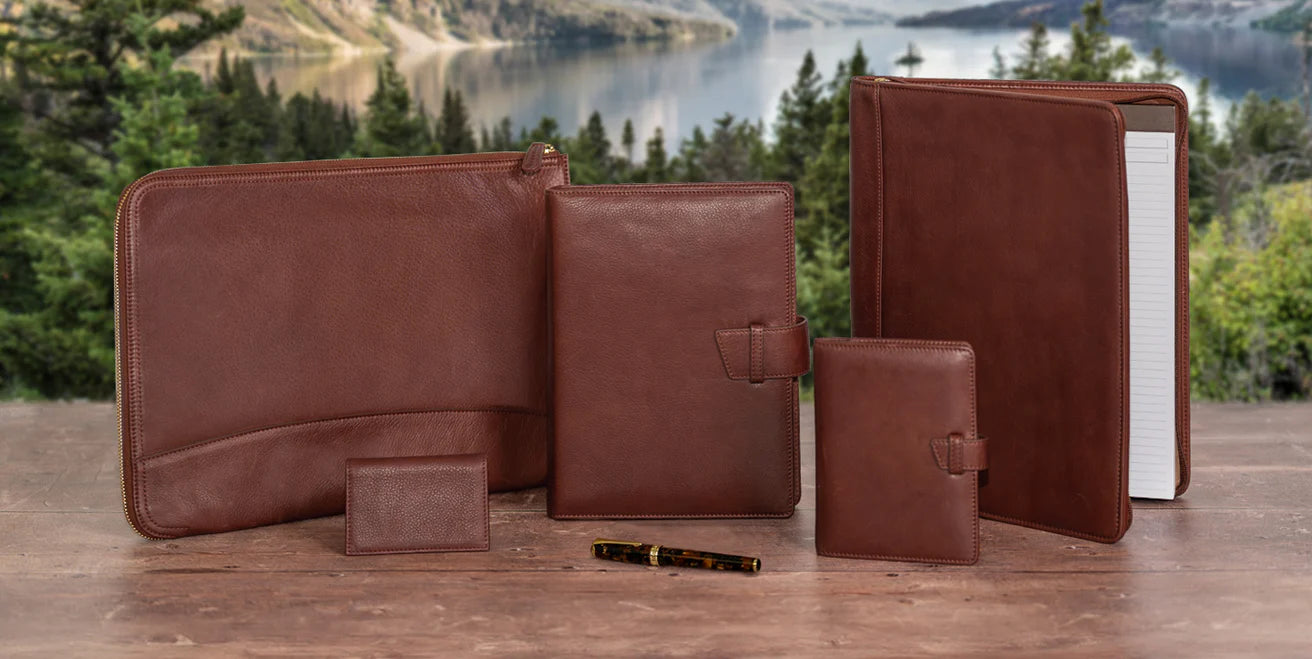
- Leather ensemble, elegant and expandable: If you want a refined upgrade that still travels easily, the Circa Laguna Discbound Notebook Bundle pairs a leather Circa notebook with aluminum discs, annotators, and a True Writer—ideal when you want one handsome notebook to do it all.
- Precision and sketching weekend: For architects, engineers, or anyone who thinks in grids, the Circa L‑Tech Engineer Notebook Bundle combines a leather Circa, aluminum discs, engineer‑grid refills, page finders, and a brass L‑Tech pen for tidy diagrams and measured plans.
- Start‑from‑scratch kit: New to discbound and want a generous setup in one move? The Super Circa Bundle assembles a leather Circa with core refills and accessories so you can build a complete offline station quickly.
Which size travels best?
Choose by bag space, writing style, and whether you’ll walk with your notebook or leave it at a rental desk. Here’s a quick comparison of common working sizes.
| Circa size | Approx. page area | Fits best in | Great for | Tradeoff |
|---|---|---|---|---|
| Junior | About 6 1/4 × 8 3/4 in (100‑gsm paper in many formats) | Tote, backpack pocket, airline seatback | Mobile planning, quick journaling, café notes | Less space for sketches or multi‑column layouts. |
| Midway | About 7 × 9 3/4 in (annotation 1/4" ruled common) | Messenger bag, slim brief, daypack | Balanced space for thinking, Cornell‑style notes | A bit taller than Junior; not as sprawling as Letter. |
| Letter | About 9 1/4 × 11 1/4 in | Briefcase, desk at rental or cabin | Map‑scale planning, broad mind maps, editing printed pages | Heavier; better for a home base than long walks. |
Rituals that protect your attention
Tools are only half the sabbatical. The other half is rhythm. Try this light structure and adjust to your setting—Santa Fe casita, Maine coast, or your own backyard.
- Friday reset (20 minutes): Unpack, set tomorrow’s top 3 on paper, and park your phone in a drawer. For a gentle template, see Analog Mornings: A 20‑Minute Paper‑First Routine.
- Two deep‑work blocks: On Saturday and Sunday, give yourself one 90‑minute screen‑free session (reading, outlining, problem‑solving). If you like a structured approach, try ideas from Deep Work Without Distractions.
- Micro breaks outdoors: Take index cards and a pocket jotter on a walk. For a minimal kit you can carry anywhere, explore The Analog Break Pack.
- Evening wind‑down: A short reflection and next‑step list clears mental residue. If you want a simple method to track tiny wins, see Analog Habit Tracking.
- Sunday close: Sketch the coming week on paper before you reopen any apps. For a calm capstone, try the ideas in Weekend Reset.
Keeping time without the phone
Lumos Clock — a weekend offline ends the first time you unlock a screen to check the hour.
Destination‑tuned packing checklists
City weekend (Chicago, New York, Seattle)
- Compact planner page or One Week at a Time spread with dinner shows and museum hours.
- Pocket jotter or Laguna Micro Notepads for bookstore finds and subway sketches.
- One versatile notebook—Midway or Junior—for café thinking.
- Pen you enjoy for long notes; stash a spare cartridge/refill.
Mountains and trails (Rockies, Smokies)
- Weatherproof daypack pouch for cards and a slim Junior‑size notebook.
- Index cards for trail ideas and a low‑ink‑smear pen.
- Printed map segments and a paper checklist for food and layers.
Coastal slow‑time (California Central Coast, Outer Banks)
- Letter‑size notebook or folio left at the rental as your “base camp.”
- Lightweight reader’s kit: book, bookmark, pocket notepad for passages to copy.
- Evening ritual card: 3 lines—What I noticed, What I learned, What I’ll carry back.
- Circa Laguna Micro Notepads (set of 4) — Pocket capture that survives a coat, for ideas on a walk.
- Notabandeau — Keeps notebook, pen and loose pages together in a weekend bag.
Smart tradeoffs when choosing tools
- One book vs. modular discs: A bound journal is slimmer; a Circa notebook lets you rearrange, archive, and add formats like checklists and weekly pads.
- Junior vs. Letter: Junior travels better; Letter supports sprawling mind maps and editing printouts. Combine them if you’ll both roam and do desk work.
- Bundle vs. piece‑by‑piece: Curated bundles cost more up front but reduce guesswork and often include pens, discs, and refills that would be pricier separately. Levenger also runs periodic promotions and offers a Rewards program that makes the long‑term path cost‑effective for frequent note‑takers. levenger.com
Care, value, and peace of mind
Levenger designs emphasize durable papers, practical layouts, and materials that age well—useful when you’re packing, repacking, and writing on the move. If you’re building a kit over time, Levenger Rewards members earn points on purchases and can redeem them for discounts; tiers increase multipliers as annual spend rises, and points have a defined expiration window so you can plan redemptions. levenger.com
And if a product isn’t right after your sabbatical test run, Levenger’s 90‑day return/exchange policy (with customary exceptions) provides a considerate safety net. levenger.com
Frequently Asked Questions
How do I pick the right Circa size for a short trip?
If you’ll walk with your notebook, choose Junior or Midway; if you’ll mostly work at a kitchen table or desk, Letter feels generous and settles flat. Consider one portable notebook plus a Letter folio you leave at your lodging for maps, plans, and longer writing.
What if I still need my phone for maps or emergencies?
Use airplane mode as your default and schedule two short “online windows” each day. Capture addresses and confirmation numbers on paper before you leave. A pocket pad helps you jot updates without unlocking your home screen.
Which paper format is most versatile for thinking time?
Annotation‑ruled pages with a wide margin suit brainstorming, reading notes, and planning because actions stay visible at a glance. If you sketch or diagram, grid refills pair well with a precise ballpoint.
Are bundles worth it for a first digital sabbatical?
Often, yes. A bundle supplies a working system—folio, notebook, paper formats, and a pen—so you can focus on the practice, not the parts. If you already own a favorite pen or cover, build your kit à la carte and add focused inserts like the Think‑List‑Plan trio.
Next steps: make your offline weekend effortless
Choose one anchor tool—a weekly view or a single notebook—then add only what serves it. If you want a ready‑made system, consider the Canvas Analog Companion Folio Bundle for a zip‑around home base, or the Circa Laguna Discbound Notebook Bundle for a refined leather setup. Keep a Laguna Micro Notepad in your pocket so ideas never have to wait for a screen. On Monday, translate the few keepers into your regular planner—and decide when you’ll take your next 48‑hour break.


