
Short answer: Clear your surface, assign zones, contain tools, give paper a path with a one-touch rule, and schedule a quick five-minute weekly reset. Do this once and your desk will stay tidy with minimal effort.
The 10-minute plan (start here)
- Remove everything. Keep only today’s work, one writing pad, and your everyday tools within reach.
- Create three zones: work surface, tools, and paper flow. Add a small display zone if you enjoy inspiring objects.
- Contain the small stuff. Use a compact catchall or box so keys, earbuds, and USB drives don’t roam.
- Give paper a path—then apply the one-touch rule. One in-tray, one active file, one archive route. When a paper enters your hand, touch it once: file, act, or recycle—no drifting piles.
- Set a five-minute Friday reset. Return tools to containers, file or recycle paper, and wipe the desk pad. Done.
One place for what would otherwise drift
Bomber Jacket Snap Tray — a catchall tray gives keys, cards and loose pens a home, which is most of what the one-touch rule actually needs.
Plan your desk like a well-run studio
Primary work zone
Keep the center clear for your laptop, keyboard, and a single notepad. Elevate items you use constantly; conceal the rest. For a compact, all-in-one surface that folds away in a studio flat or NYC apartment, consider the space-saving No-Room Hideaway Desk.
Tool zone
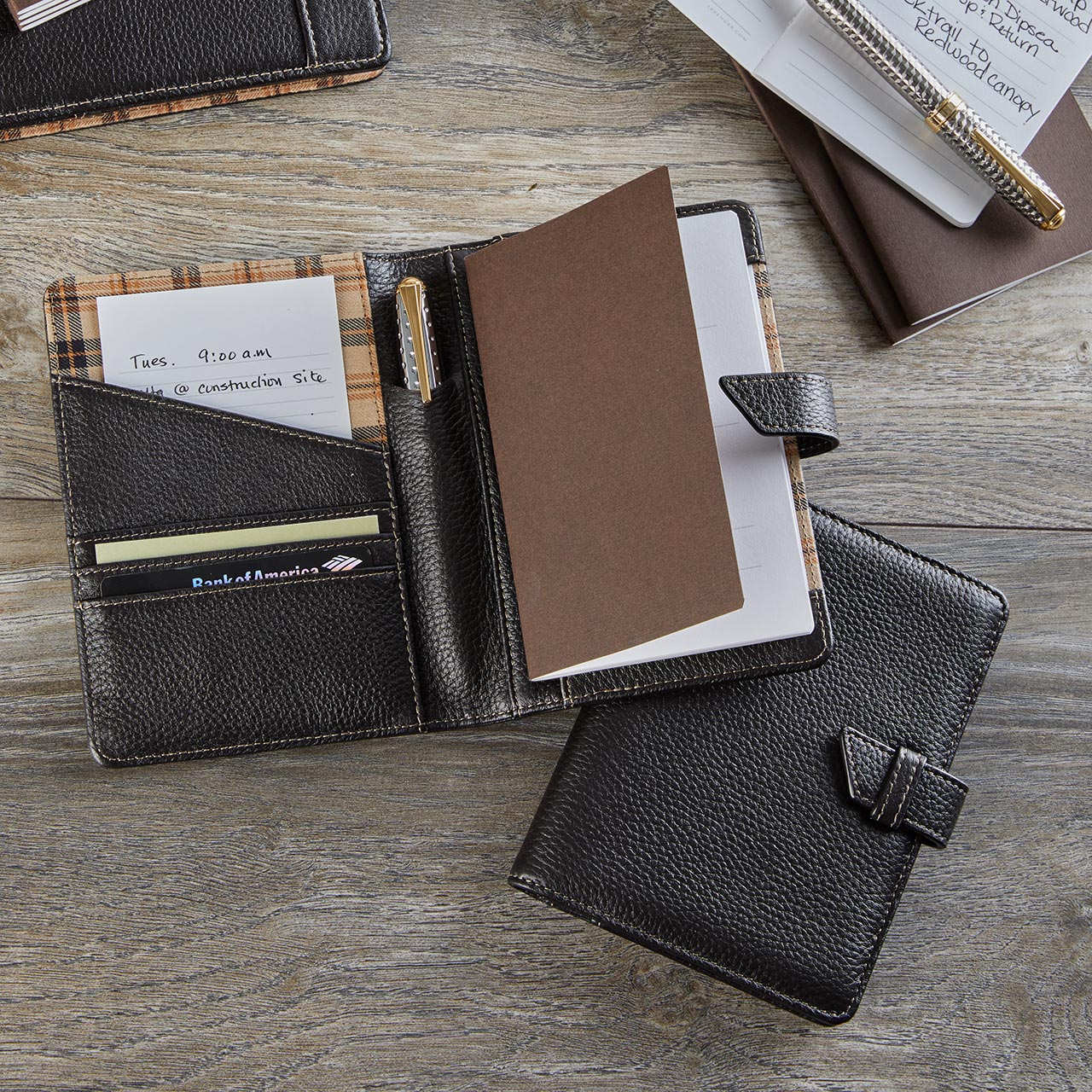
Gather daily-use tools (pens, sticky notes, glasses) into one organizer to prevent drift. A refined option is a desk unifier that corrals notebooks, cards, and writing tools; see the streamlined Morgan Leather Desk Unifier or the distinguished Downing Street Desk Unifier for an executive look. Classic pen cups, letter trays, and a Bomber Jacket Desk Pad also reinforce order without visual noise.
Paper flow zone
Paper stays tidy when it has a dedicated pathway: in, action, out/archive. A vertical or stepped sorter keeps it visible but contained. If you’re setting up or overhauling your system at home, this companion guide walks through categories and rules: how to set up a home filing system that stays organised.
Display zone (optional)
One or two meaningful objects add character without clutter. If you enjoy showcasing pens or tools, get ideas from Presentation Matters: Cases, Stands, and Desk Display Ideas.
What earns a place on the desk vs. in a drawer
- On the desk: items used many times per day—laptop, one notepad, two favorite pens, phone stand, a compact in-tray, and a catchall tray.
- In a drawer or organizer: backups and occasionals—extra pens, stamps, chargers, notecard sets, cables, external drives.
- Off the desk (shelved or archived): completed work, reference binders, and supplies you restock from weekly.
Right-size your containers so the desk invites order. For small parts, a travel-friendly catchall like the Bomber Jacket Snap Tray keeps essentials corralled and stylish.
Set up containers that prevent clutter
- Active paper: A low-profile file holder keeps current projects upright and visible—try a bundle like the Raffia Desk File Holder Bundle for a clean, natural look.
- Everyday tools: A desktop unifier centralizes pens, cards, notes, and devices—see the Morgan Leather Desk Unifier for a refined footprint that fits most desks.
- Concealed storage: If you prefer visual calm, a roll-top organizer hides notes and supplies between sessions; the Vintage Rolltop Desk Organizer brings timeless charm while concealing clutter.
- Modular drawers: For makers and multi-hyphenates, stack shallow compartments so tools don’t migrate; the Cubi Creators Desktop Cabinet provides tidy, modular storage right on the desk.
- Stationery sets: Keep correspondence and cards pristine in a dedicated box; the King’s Stationery Box or the compact Reader’s Tool Box make it effortless to put things away.
- Foldaway overflow: For small apartments or shared setups, a stowable bin like the Raffia Desktop Foldable Storage Box handles seasonal or rotating supplies.
- Raffia Desk File Holder Bundle — Keeps current projects upright and visible in a low-profile, natural-fiber holder for active paper.
- Vintage Rolltop Desk Organizer — Conceals notes and small supplies behind a roll-top for a calmer desk between sessions.
- Cubi Creator's Desktop Cabinet — Provides labeled, shallow drawers for creatives who switch modes and need organized compartments.
- The King's Stationery Box — A refined box for stationery that keeps cards, notepads, and small tools neatly contained.
- Reader's Tool Box — A compact toolbox that centralizes pens, clips, and everyday desk tools for easy reach.
- Morgan Leather Desk Unifier — A refined, low-footprint unifier that centralizes pens, cards, notes, and a phone on the desktop.
A five-minute reset that keeps your desk perpetually tidy
- Sort the paper path. File what’s done; move action items to the front of your active holder; recycle the rest. If you need structure, see this simple home filing system guide.
- Return tools to containers. Pens into the unifier or pen cup, small tech into the catchall, paper goods into their tray.
- Stage tomorrow’s work. Place the first task at the center of your work zone—one pad, one document, one goal.
- Wipe and reset. Clear crumbs and dust; straighten your desk pad.
- Close the day. If you share space (London flat share, Toronto condo, or a home office in the US), shut the rolltop or tuck items in lidded organizers.
For focus rituals that pair paper with posture-friendly reading, see these study block tips and protect your eyes and neck with the ergonomic ideas in Eyes and Posture.
- Mini Pen Wheel — Keeps three or four pens upright and countable, so the reset takes seconds.
- Circa Keeping Tabs Discbound Sticky Notes (set of 2) — Notes that live in the notebook rather than migrating onto the desk surface.
Quick comparisons: choose the right organizer for your desk
- Desk unifier (Morgan/Downing Street): Best for everyday carry on the desk—pens, cards, small notebooks, and phone in one refined home.
- Rolltop organizer: Ideal if you want a visually calm desk and classic style; lid conceals shelves between sessions.
- Vertical file holder (Raffia bundle): Keeps current projects front-and-center without piles; great for paper-heavy roles.
- Modular cabinet (Cubi Creators): Suits creatives who switch modes (writing, sketching, crafting) and need shallow, labeled drawers.
- Catchall tray (Bomber Jacket Snap Tray): A compact, elegant corral for pocket items, USB drives, and charging bricks—prevents micro-mess.
- Minister's Dispatch Desk Unifier — A compact, refined desk unifier option that corrals pens, cards, and small notebooks.
- Adjust-A-File — A slim vertical filing solution to keep active projects upright and accessible at the edge of your desk.
Small-space and shared-desk strategies
- Maximise verticals. Choose a vertical file and a slim unifier over wide trays to free surface area.
- Pick foldable/closeable pieces. A rolltop or foldable box hides work at day’s end—ideal for a UK flat share or a Toronto condo.
- Choose a foldaway desk. If your office is also a living room, the No-Room Hideaway Desk tucks work out of sight.
- Standardise your kit. Keep duplicates of only what you use daily; store spares off-desk.
FAQ
What should stay on my desk every day?
Today’s work, a primary writing pad, two pens, your phone dock, and one in-tray or file holder. Everything else belongs in a unifier, drawer, or storage box.
How do I stop paper piles from forming?
Give paper a path: in, action, archive—then follow the one-touch rule. Use a vertical holder for action and schedule a weekly file session. For step-by-step setup, read our home filing guide.
How do I maximise my desk space?
Go vertical (file holder, pen cup), keep only daily tools on the surface, and use a desk pad to define the work zone. Foldaway pieces and a rolltop or lidded box keep small homes and shared offices tidy.
How do I organise my desk for productivity?
Use three zones (work, tools, paper), stage tomorrow’s first task in the center, and set a five-minute reset. A unifier plus a single in-tray reduces decision fatigue.
How often should I declutter my desk?
Daily micro-tidy in under five minutes; deeper review weekly. End of month, archive completed work and restock supplies.
Why does an organised desk matter?
It saves time, lowers decision load, and signals a clear start/finish to the day—especially important in home offices where boundaries blur.
What if I share a desk?
Use personal kits—each person gets a labeled unifier or box—and end-of-day resets. Close-lid organizers like the Vintage Rolltop Desk Organizer help maintain boundaries.
How do I keep a desk tidy with kids or pets around?
Contain small items in a lidded box and move tiny tech into a catchall. Clear the center surface daily so curious hands or paws don’t find easy targets.
Can better ergonomics help reduce desk clutter?
Yes—the right height and sightline reduce extra stands and duplicates. See posture-friendly tips in Eyes and Posture.
Bring order with tools that last
Choose one container for tools, one for active paper, and one small catchall—then commit to the five-minute weekly reset and the one-touch rule. Explore refined options like the Morgan Leather Desk Unifier, the airy Raffia Desk File Holder Bundle, the classic Vintage Rolltop Desk Organizer, and the pocket-perfect Bomber Jacket Snap Tray. Begin with one upgrade today, and let your desk become a daily invitation to do your best work.
- Bomber Jacket Desk Set (set of 5) — A coordinated desk set that includes multiple containers to outfit tools and small catchalls together.
- LevTex Hanging File Folders (set of 5) — Durable hanging file folders to keep active papers sorted and ready in a long-lasting system.
- Bomber Jacket Pen Capsule — A pocket-sized capsule that serves as a small catchall for coins, keys, and loose desk items.


