
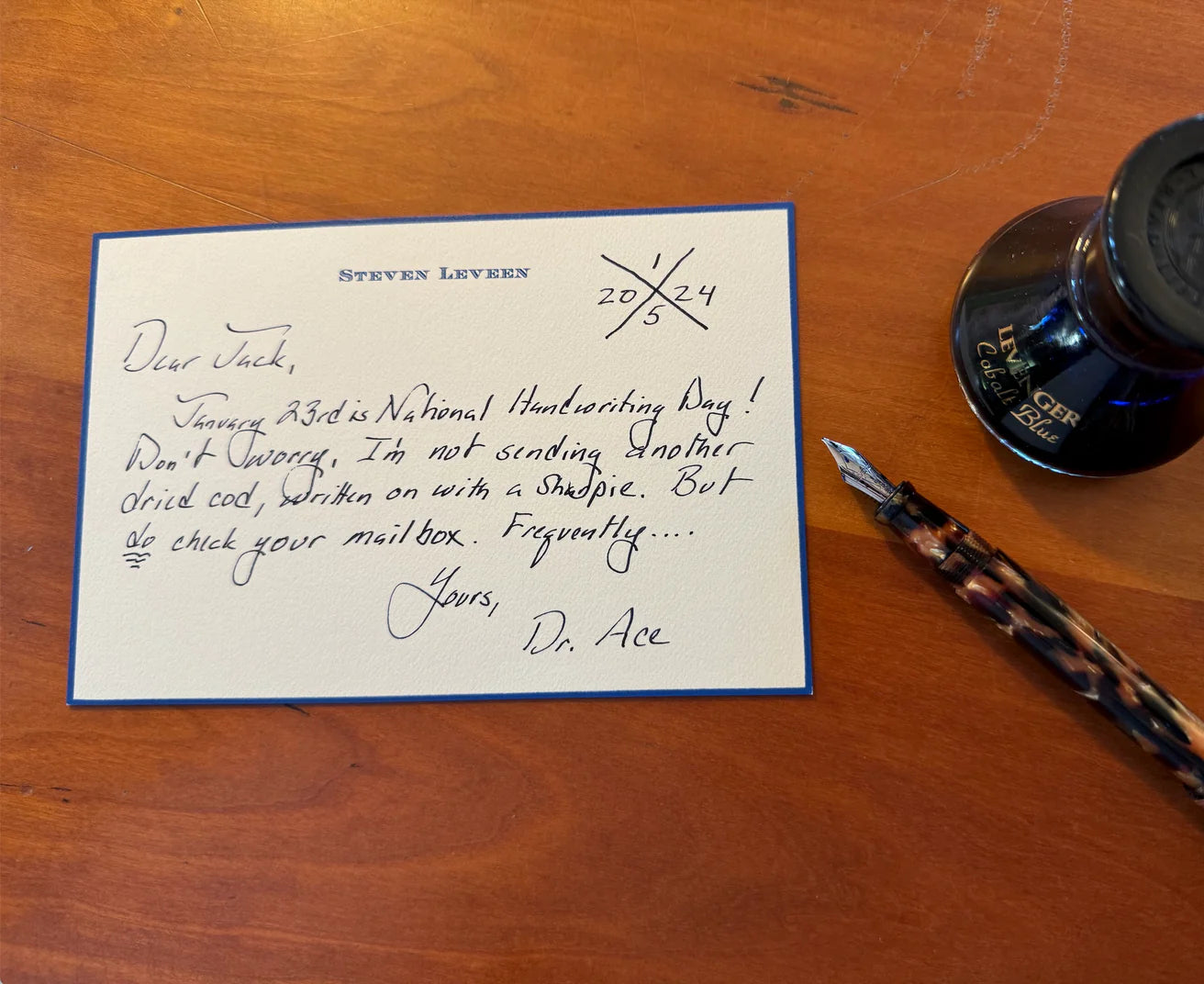
Calligraphy rewards curiosity. If you enjoy the feel of a fountain pen and you’re wondering when to try italic, stub, or flex nibs, this guide offers clear signposts, side‑by‑side comparisons, and a practical practice plan. We’ll keep the tone scholarly but warm—because beautiful writing isn’t just ornament; it’s a satisfying craft you can fit into a thoughtful daily routine.
Are You Ready to Try a Special Nib?
- Your handwriting feels consistent but flat: If your current fine or medium nib makes tidy notes yet all strokes look uniform, an italic or stub can add natural line variation.
- You sketch letterforms in pencil first: Comfort with shapes and spacing means you’ll benefit from a nib that reflects those choices on paper.
- You enjoy slower, deliberate writing: Calligraphy nibs reward pace and posture. If you already savor a slower line, you’ll adapt quickly.
- You like the idea of seasonal or project‑based tools: Swapping nibs for wedding envelopes, certificates, or personal stationery keeps the craft fresh.
Not sure which everyday pen style you prefer? Start with Choosing Your Everyday Writer: Ballpoint vs. Rollerball vs. Fountain, then return here when you’re ready to shape letters with purpose.
Special Nib Families—What Changes on the Page
Different nib geometries alter stroke width and character. Here’s a concise, user‑focused comparison.
Decision Matrix: Which Nib for Which Outcome?
Use this table to match your goals to a nib style before buying or swapping.
| Nib Style | Line Character | Learning Curve | Best For | Tradeoffs |
|---|---|---|---|---|
| Italic | Sharp contrast; crisp verticals and fine horizontals | Moderate | Formal scripts (Italic, Blackletter caps), headings, certificates | Demands steady pen angle; can feel feedback‑y on textured paper |
| Stub | Softer variation; forgiving edges | Easy | Daily notes with flair, invitations, journaling titles | Less dramatic than italic; very small handwriting may blur |
| Flex | Pressure‑responsive thicks/thins | Advanced | Ornamental scripts, expressive flourishes | Requires control of pressure and ink flow; slower writing |
| Fude (upturned) | Angle‑dependent line weight; sketch‑friendly | Easy | Illustrated notes, expressive headings | Non‑traditional look for formal scripts |
| Architect (chisel ground) | Wide horizontals, thin verticals | Advanced | Block caps, technical titling | Usually custom; angle‑sensitive |
If you already own a fountain pen, review point sizes and paper pairings in Nib Selector: Fine, Medium, Broad—Line, Feedback, and Paper Pairings. For ink behavior—dry time, sheen, and water resistance—see Ink 101: Cartridges vs. Bottled, Drying Time, Sheen, and Water Resistance.
Smart Ways to Try Calligraphy Without Over‑Investing
- Disposable fountain pens for stress‑free trials: A no‑maintenance set like the Pilot Varsity Fountain Pen Gift Set lets you test slower, deliberate writing and practice letter shapes in multiple colors before committing to specialty nibs.
- All‑in‑one calligraphy kits: The Sheaffer Maxi Calligraphy Gift Set includes three pens and three italic nibs (fine, medium, broad)—ideal for feeling how different widths change texture without buying separate components.
- Traditional dip‑pen control: If you’re drawn to classic inks and interchangeable nibs, the J. Herbin Calligraphy Boxed Set provides five German‑made steel nibs and a bottle of black ink in a pine box—great for crisp italic strokes and tactile feedback.
- Pencil first, always: Drafting letterforms with a quality pencil refines spacing before ink. For a tidy setup that includes paper, the Blackwing Essentials Set with Notebook keeps warmups and exemplars in one place. If you prefer a desk‑worthy, giftable organizer, consider the Blackwing Walnut Pencil Box Gift Set.
Hand comfort matters as much as nib geometry. If pen size or balance affects your control, match body dimensions to your grip with Ergonomics & Balance: Matching Pen Weight and Diameter to Your Grip.
- Pilot Varsity Fountain Pen Gift Set — A low‑cost, no‑maintenance fountain pen set to try slower writing and multiple colors before committing to specialty nibs.
- Sheaffer Maxi Calligraphy Gift Set — Three pens with italic nibs (fine, medium, broad) to feel how different widths change letter texture without buying separate parts.
- J Herbin Calligraphy Boxed Set — A classic dip‑pen boxed set with interchangeable nibs and inks for trying traditional nib control affordably.
- Blackwing Essentials Set with Notebook — A ready notebook plus basic essentials to track trials and practice drills without extra setup.
- Blackwing Walnut Pencil Box Gift Set — A curated pencil gift set that makes quick warmups and color testing easy while trying different mark‑making styles.
- Ferris Wheel Press Lord of the Rings Bijou Fountain Pen and Ink Set — A themed fountain‑pen and ink gift set that lets you test nib feel and ink behavior with minimal investment.
How to Practice: A Four‑Week Plan You’ll Actually Finish
Consistency beats intensity. This plan uses short, structured sessions so you can keep momentum alongside work or study. If you’re in the United States and address a lot of No. 10 envelopes, size your guidelines to that proportion early to build real‑world muscle memory.
Week 1: Posture, Angle, and Warmup Shapes
- Setup: Seat height so forearms rest lightly on the desk. Keep the nib at a steady angle (about 30–45° for italic/stub). A simple stand helps maintain a calm workspace; the modular Fountain Pen Studio keeps nibs, inks, and practice pages orderly.
- Warmups (5 minutes): Ovals, straight lines, and “nib dance” drills (light upstrokes, deliberate downstrokes). Use pencil first, then ink.
- Letters (10 minutes): Practice only the foundational strokes that build letters in your target script.
Week 2: Lowercase Families
- Group letters by stroke: For italic: n, h, m; then a, d, g; then i, l, t. Repeat each family until spacing looks even at a glance.
- Spacing: Pencil in guidelines, then trace with a stub nib for a forgiving slope before moving to crisper italic.
Week 3: Capitals and Rhythm
- Cap drills: Work 2–3 capital forms per day to avoid fatigue.
- Word rhythm: String short words to learn even texture. If left‑handed, see Left‑Handed Writing Tips: Smudge Control and Line Choice for angle and paper position adjustments.
Week 4: Layouts and Real Projects
- Practice projects: Address a set of envelopes, write a short poem, or create menu headings. Switching to a richly colored pen‑and‑ink pairing, like the Ferris Wheel Press Bijou Pen and Ink Set, can keep motivation high.
- Refine and review: Photograph before/after pages to see progress and adjust nib choice.
If you need paper suggestions that behave well with wet lines and broad nibs, explore Paper Compatibility: Which Levenger Papers Love Fountain Pens.
Ink Flow, Care, and Long‑Term Ease
- Flow tuning: If lines look starved or too wet, change paper or ink first before blaming the nib. Review practical ink choices in Ink 101.
- Simple maintenance: Clean nibs regularly to preserve crisp edges and smooth flow. Follow the easy routines in Maintenance Rituals: Cleaning, Flushing, and Safe Storage.
- Troubleshooting: For skips or hard starts—common when learning slower downstrokes—work through Troubleshooting Flow: Skips, Hard Starts, and Scratchiness.
Levenger Perspective: Quality That’s Practical to Own
Levenger favors enduring tools—thoughtful in the hand and on the desk. If you value cost‑effective ways to explore, starter sets like the Pilot Varsity Fountain Pen Gift Set and the approachable Sheaffer Maxi Calligraphy Gift Set make practice economical, while made‑to‑keep pieces such as the Fountain Pen Studio help your workspace invite regular use. Seasonal promotions and a straightforward loyalty program make it easier to build a writing toolkit over time without rushing purchases.
- True Writer Classic Golden Dark Tortoise Fountain Pen — A well‑made, durable fountain pen that’s built to keep and encourages regular use as you explore special nibs.
- True Writer Two-Tone Herringbone Anniversary Fountain Pen — A higher‑end anniversary fountain pen offering quality materials and nib performance for long‑term ownership.
- Levenger Bi-Color Steel Nib — A robust replacement nib that lets you upgrade performance without buying a whole new pen.
Practice Aids You’ll Actually Use
- Guideline notebook habit: Keep one notebook solely for drills and exemplars; the Blackwing Essentials Set with Notebook streamlines that habit.
- Theme prompts: Rotate weekly themes to practice capitals and spacing; a cheerful set like the Wildflowers Pencils (Set of 10) or the bookish Library Books Pencils (Set of 10) makes warmups approachable at home, in the studio, or in a classroom.
- Display and gifting: A curated desktop and a visible pen encourage daily reps; for display inspiration, see Presentation Matters: Cases, Stands, and Desk Display Ideas. For a bigger picture of building a right‑sized collection, visit Starter to Collector: Building a Capsule Pen Collection.
- Library Books Pencils (set of 10) — A set of themed pencils that makes warmups approachable and helps you rotate weekly practice prompts.
- Circa Pebbled Leather Foldover Notebook — A handsome foldover notebook ideal for keeping a single dedicated practice notebook for drills and exemplars.
- Fountain Pen Studio — A display‑ready studio piece that encourages daily use and keeps pens accessible for regular practice.
When to Move Up a Nib—or Swap It Entirely
As your control improves, you may prefer a broader stub for dramatic headers and a finer italic for compact notes. If you’re exploring fountain‑pen systems with interchangeable points, review Refills & Converters: Getting the Most from Your Levenger and Partner Brands to keep your setup flexible, and consider the ergonomics guidance above before assuming the nib alone is the culprit. For travel days, keep pens inked wisely and check Traveling with Pens: Flying, Leaks, and Everyday Carry for leak‑smart habits.
Frequently Asked Questions
Should I start with a stub or an italic nib?
Choose a stub if you want immediate, forgiving line variation for headings and notes. Pick an italic if you want crisper edges for formal scripts and you’re willing to maintain a consistent pen angle.
Do I need special paper?
Paper that resists feathering preserves the clean edges you’re practicing. Before changing nibs or inks, try the fountain‑pen‑friendly options in Paper Compatibility: Which Levenger Papers Love Fountain Pens.
Is flex too advanced for beginners?
Flex isn’t off‑limits, but it does require slower writing and pressure control. Many writers build confidence with a stub or italic first, then add flex once spacing and rhythm feel natural.
How do I keep ink flow consistent while practicing?
Flush your pen periodically, use compatible paper, and match ink wetness to your nib width. When issues arise, work through Troubleshooting Flow and refresh routines in Maintenance Rituals.


