
The best pen for a left-handed writer is the one whose ink is dry before the palm reaches it. About one in ten writers leads with the left hand—which often means the palm can cross fresh ink. These tips focus on posture, page setup, ink technology, and line width so your notes stay crisp in meetings, classrooms, and journals.
Start with posture and paper: quick wins that prevent smears
- Know your approach. Underwriters keep the hand below the baseline; overwriters use a higher “hook.” Either style can be clean if your setup keeps the palm off wet ink.
- Rotate the page 20–30° clockwise. On U.S. Letter sheets, this lets your pen pull rather than push, improving control and giving ink a moment to set.
- Lower your first writing line. Begin a line one or two rules lower than usual so your palm rests on dry paper.
- Use a palm shield or firm backing. A slim card or sturdy board under your hand prevents transfer during long notes. For portable structure, a rigid backer like the bundle in Chief Engineer Pad Backer Bundle creates a smooth platform anywhere.
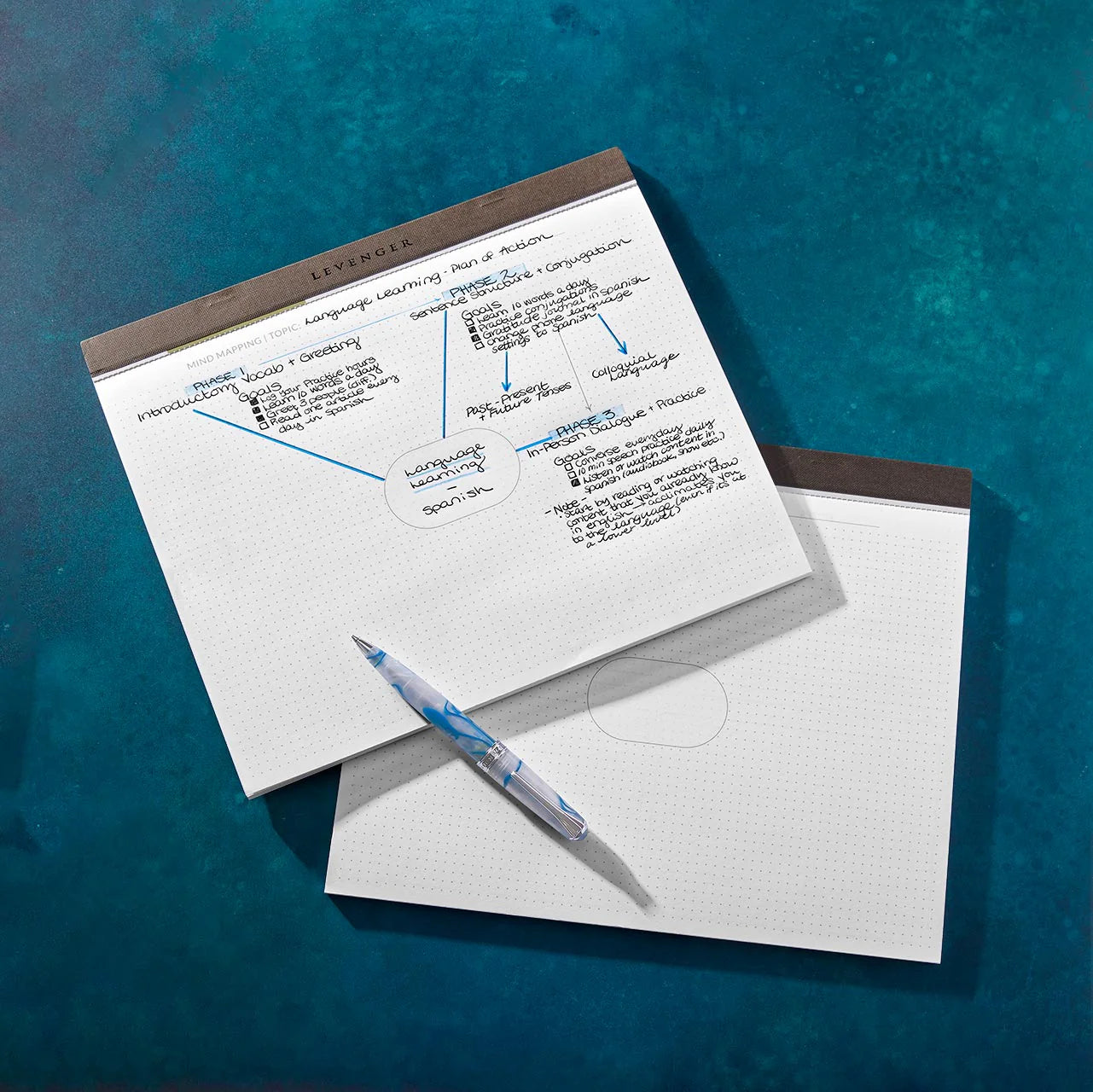
- Choose ambidextrous layouts when possible. Desk-size formats with mirrored note columns keep your palm out of ink regardless of direction; the reversible format of Freeleaf Oasis Desk Pads (Set of 2) is designed for both left‑ and right‑handers.
Comfort and balance matter, especially for long sessions. If grip size or pen weight causes strain, see Ergonomics & Balance: Matching Pen Weight and Diameter to Your Grip.
Ink technologies and smudge risk
Dry time varies more by ink system than brand. Use this quick matrix to match your priorities to the technology you carry.
Left‑handed smudge control: ink types at a glance
| Pen type | Typical dry time | Line character | Smudge risk for lefties | Best for |
|---|---|---|---|---|
| Ballpoint (oil‑based) | Fast | Clean, lower saturation | Low | Forms, glossy stock, quick signatures |
| Rollerball (water‑based) | Moderate | Fluid, saturated | Medium | Meeting notes with a smooth feel |
| Gel | Moderate to slow | Bold color, crisp edges | Medium–High | Color‑coding and emphasis |
| Fountain (dye or pigment) | Varies by nib / ink / paper | Expressive; nib sets width & feedback | Low–High (setup‑dependent) | Daily writing, journaling, signatures |
If you’re still weighing everyday formats, compare feel and care in Choosing Your Everyday Writer: Ballpoint vs. Rollerball vs. Fountain. For ink chemistry and dry‑time nuances across cartridges and bottled options, visit Ink 101: Cartridges vs. Bottled, Drying Time, Sheen, and Water Resistance.
- Sheaffer K Ballpoint Refill — Paste ink sets on contact, so the palm that follows your hand has nothing wet to cross.
- Lamy Capless Rollerball Refill — A liquid-ink feel in a retractable body, for when you want flow without a cap to manage one-handed.
Line width: why finer often helps left‑handers
Narrower lines usually put less liquid on the page per millimeter, so they dry sooner. For fast notes, left‑handers typically favor Fine or Extra‑Fine fountain nibs, 0.5 mm gels or smaller, and standard ballpoints. Prefer broader, expressive strokes? Pair them with quicker‑drying paper and give each line a brief beat before your palm crosses it.
To see how Fine, Medium, and Broad compare—including feedback and paper pairings—explore Nib Selector: Fine, Medium, Broad—Line, Feedback, and Paper Pairings.
Going finer without changing pens
Levenger Rollerball Refills, Extra-Fine (set of 2) — an extra-fine refill lays down less ink to dry, which is the cheapest way to test whether width is what's smudging.
Paper makes the difference: pair sheet and pen for faster set times
Paper that’s too absorbent feathers and widens lines; paper that’s too coated keeps ink wet. Levenger’s Freeleaf formats strike a usable middle: smooth enough for clean strokes, substantial enough to resist bleed‑through, and available in layouts that keep a left‑handed palm off the action.
- Annotation layouts for organized notes. The side margin keeps action items away from your palm—try Freeleaf Annotation Ruled Pads for everyday class or meeting notes.
- Premium stock when you want slower feathering with wet inks. The heavier paper in Luxe Freeleaf Annotation Ruled Pads offers a refined surface that stays crisp under fountain pens.
- Grids help control slant. If rotation changes your letter angles, Freeleaf Full Page Grid Pads (set of 5) or Freeleaf White Annotation Grid Pads provide visual guide rails.
- Classic ruled for long pages. When you want the familiar rhythm of lines across the full sheet, choose Freeleaf Full‑Page Ruled Pads (set of 5).
- Gentle contrast to reduce visual fatigue. Softer tints can keep your eye relaxed on marathon days; Freeleaf Soft Focus Annotation Ruled Pads (set of 5) are a calm, lefty‑friendly choice.
For deeper pairing guidance, see Paper Compatibility: Which Levenger Papers Love Fountain Pens.
- Freeleaf Annotation Ruled Pads (set of 5) — Annotation layout and side margin keep your left hand off notes while balanced stock resists bleed and feathering.
- Freeleaf Luxe Annotation Ruled Pads (set of 5) — Heavier, premium Freeleaf stock slows feathering for wetter inks while preserving smoothness for clean strokes.
- Freeleaf Full Page Grid Pads (set of 5) — Grid pages give structure without extra coating, helping ink dry cleanly and lines stay crisp.
- Freeleaf White Annotation Grid Pads (set of 5) — White annotation grid balances contrast and ink absorption to reduce smudging while aiding layout.
- Freeleaf Full-Page Ruled Pads (set of 5) — Full-page ruled pads offer a straightforward, balanced sheet that resists bleed while keeping strokes smooth.
- Freeleaf Soft Focus Annotation Ruled Pads (set of 5) — Soft-focus annotation stock reduces show-through and feathering while keeping a tactile, forgiving surface.
Technique tweaks that quietly stop smudges
- Lighten pressure. A relaxed grip reduces over‑inking and helps the palm glide.
- Segment fast writing. Short pauses at natural breaks let lines set before your hand advances.
- Use a backing board. Placing a smooth board behind the current sheet sharpens line edges and lowers drag; the rigid board in the Chief Engineer Pad Backer Bundle doubles as a portable desk.
- Practice expressive nibs after your baseline is dialed. When you’re ready to experiment, start with controlled sessions and guidance from Calligraphy & Special Nibs: When to Experiment and How to Practice.
Setups that serve left‑handers at work and on the go
- Desk to whiteboard. For brainstorming that keeps palms off wet ink, the mirrored layout on Freeleaf Oasis Desk Pads (Set of 2) provides left‑and right‑side note lanes around a central sketch space.
- Conference room rotation. If you switch between sketching and structured notes, the two‑sided ideation/storyboard format of Freeleaf Flow State Ideator Pad (set of 2) helps you stay organized without flipping tools.
- Everything in one folio. An ambidextrous portfolio keeps pads and pens aligned whichever way you write; the Carrie Ambi‑Flex Folio is built to work for left‑ or right‑handers and holds both a Freeleaf notepad and a Circa notebook.
Keep your writing tools reliable with gentle maintenance and smart storage habits from Maintenance Rituals: Cleaning, Flushing, and Safe Storage. If a pen hesitates or floods, consult Troubleshooting Flow: Skips, Hard Starts, and Scratchiness.
- Freeleaf Flow State Ideator Pad (set of 2) — Two-sided ideation/storyboard format keeps sketches and notes organized without flipping, helping left-hand flow.
- Leather Ambi-Flex Folio — An ambidextrous folio holds pads and pens in a layout that works for left- or right-hand writing on the go.
- Morgan Pocket Desk Pad — A compact pocket desk pad gives a stable, palm-friendly surface for jotting notes while mobile.
Troubleshooting smudges (and when it’s not you)
- Skips followed by blobs. Your feed may be too wet for the paper, or residues need a flush—see Troubleshooting Flow.
- Random smears away from your desk. Temperature and pressure changes in transit can move ink. Before big trips or flights, review Traveling with Pens: Flying, Leaks, and Everyday Carry.
- Paper is the culprit. Receipts and high‑gloss forms resist water‑based inks. Keep a quick‑dry option handy and switch sheets—annotation layouts like Freeleaf Annotation Ruled Pads make it easy to mark action items without dragging your palm.
When the sheet is the problem
Freeleaf Horizontal Annotation Ruled Pads (set of 2) — a horizontal annotation layout keeps the margin on the side your hand isn't resting on.
Smart, low‑pressure shopping notes
- Prioritize the page you use most. Since paper has a large effect on smudging, start by upgrading to a format that suits your setting—office, classroom, or studio. Options range from Full‑Page Ruled Pads to structured layouts like White Annotation Grid Pads.
- Add structure for mobile writing. A rigid board keeps lines sharp on your lap or in the field; the Chief Engineer Pad Backer Bundle is a portable upgrade that many left‑handers find immediately helpful.
- Organize for flow. Keeping your favorite pad and a secondary format together reduces decision friction; the Carrie Ambi‑Flex Folio holds multiple layouts and supports left‑ or right‑side insertion.
Levenger pieces are crafted to last. Many are more cost‑effective than they first appear because they’re built for years of use—and you’ll often find seasonal values. If you write daily, the loyalty program makes it easy to earn rewards over time.
- Minister's Dispatch Desk Set — A portable desk set bundles a rigid board and tools so you can write cleanly in classrooms, meetings, and fieldwork.
- Freeleaf Signature Selections Sampler (set of 5) — A sampler pack lets you test multiple Freeleaf formats to find the sheet that best reduces smudging for your use.
Frequently Asked Questions
Do fountain pens always smudge more for left‑handers?
No. With a Fine or Extra‑Fine nib, compatible paper, and slight page rotation, many left‑handers get consistently clean notes. If you prefer wetter, broader lines, give each stroke a brief pause or switch to heavier stock like Luxe Freeleaf Annotation Ruled Pads.
What page formats help the most in fast meetings?
Annotation layouts keep action items out of your palm path, and mirrored designs reduce smears when you switch modes mid‑meeting. Try Freeleaf Annotation Ruled Pads for structured notes or the left‑/right‑friendly Freeleaf Oasis Desk Pads for collaborative work.
How fine should my line be to minimize drying time?
As a starting point, aim for Fine or Extra‑Fine nibs or 0.5 mm tips. Medium can work well if paired with faster‑setting paper. For a detailed comparison, see Nib Selector.
Is there a way to keep notes tidy while traveling between rooms?
Use a rigid backing and a folio so your setup is consistent from desk to conference room. The Chief Engineer Pad Backer Bundle offers stability, and the Carrie Ambi‑Flex Folio keeps pads and pens organized for left‑handed access.
Next steps
Refine your writer choice with Choosing Your Everyday Writer, tune paper pairings with Paper Compatibility: Which Levenger Papers Love Fountain Pens, and keep your tools dependable with Maintenance Rituals. When you’re ready to explore more expressive scripts, visit Calligraphy & Special Nibs: When to Experiment and How to Practice.


