
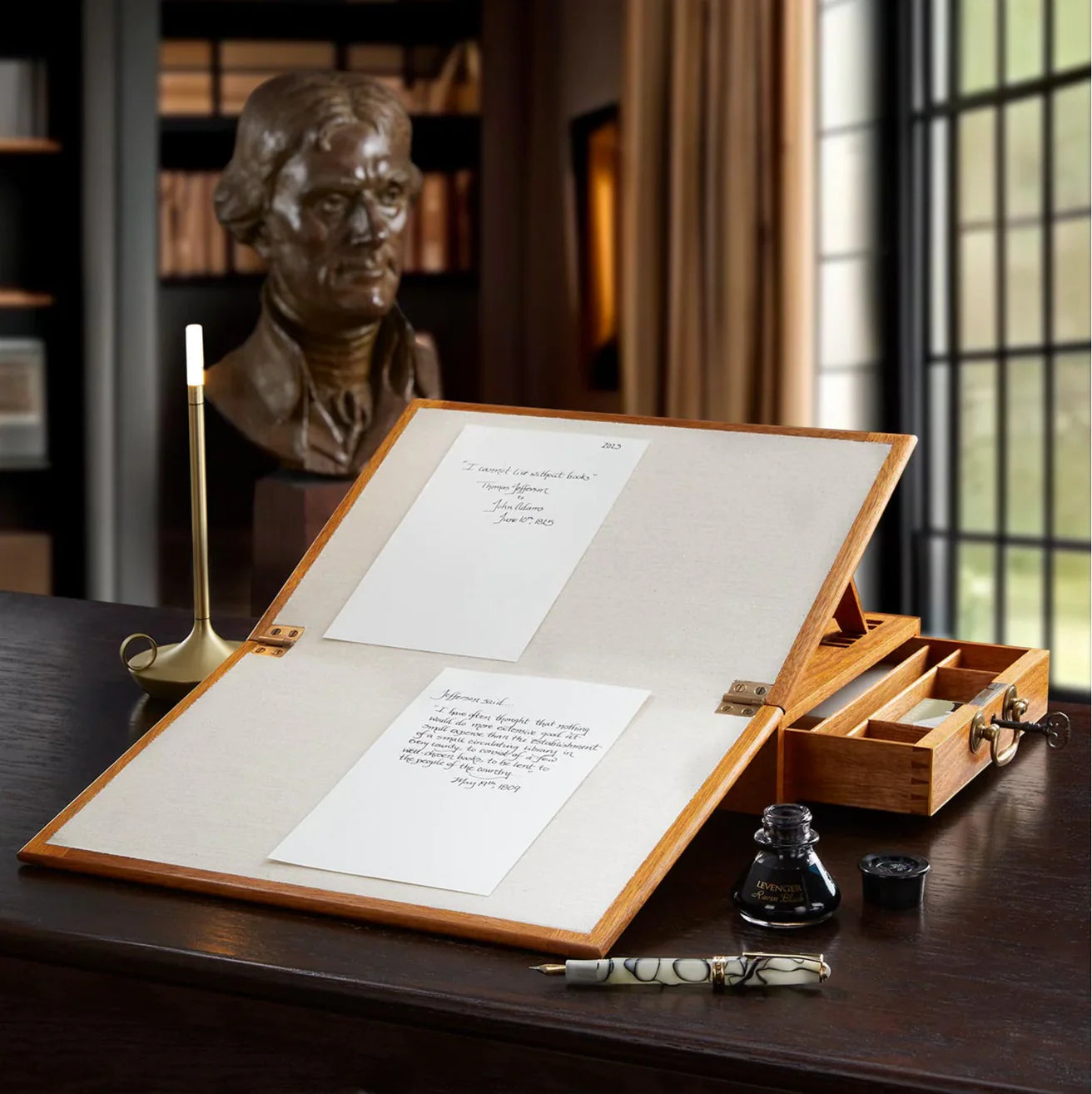
Your desk is a stage for the tools you rely on. The right case or stand keeps instruments safe and ready, while a thoughtful display invites you to write more often. Below, you’ll find clear selection criteria, a compact comparison matrix, and practical setups—from compact home offices to formal U.S. workplaces—using enduring Levenger pieces that balance craftsmanship with everyday value.
Start with intent: protect, present, or both?
Before looking at finishes and capacity, decide what you want your storage to do most of the time:
- Everyday access: Pens visible and within reach for frequent note‑taking or signing.
- Showcase: A curated presentation for a conference room credenza or bookcase shelf.
- Archival protection: Dust‑free, non‑reactive cradles and a lid or drawer system.
- Travel & commuting: Secure carry with loops/dividers that prevent scuffs and leaks.
- Desk unification: One landing zone for pens, cards, mail, and folders—tidy and efficient.
Quick comparison: display and storage options
Use this decision matrix to match options to your priorities.
| Option | Capacity | Protection | Visibility | Best for | Tradeoff |
|---|---|---|---|---|---|
| Desktop stand/carousel | Medium–High | Low–Medium (open air) | High | Quick access and rotation | Not dust‑sealed |
| Glass‑topped display box | Medium–High | High | High | Display + preservation | More desktop footprint |
| Drawer‑style collector case | High | High | Medium (view on open) | Larger collections | Access takes an extra step |
| Travel folio/pouch | Low–Medium | High (loops/dividers) | Low–Medium | Daily carry or commute | Not for large displays |
| Desk unifier (multi‑compartment) | Medium | Medium–High | Medium | One‑stop desktop station | Less specialized for large collections |
Display that invites use: stands and angled presentations
If you reach for different pens throughout the day, a stand keeps inspiration in view. A revolving carousel like the Pen Wheel displays up to 30 pens upright in velvet‑covered inserts that fit diameters up to 5/8 inch—compact, 360‑degree access for “grab‑and‑go” writing across meetings.
Prefer a glass‑topped view that presents pens at an elegant angle? The Point of View Pen Case holds 10 instruments in non‑reactive suede‑lined 1/2‑inch grooves under a clear lid, so favorites are ready without inviting dust. Place angled cases where they catch indirect light, not direct sun, to protect resins and inks from heat. For nib feel and balance considerations as you curate a “front row,” see Ergonomics & Balance: Matching Pen Weight and Diameter to Your Grip.
- Pen Wheel — 360° carousel that holds up to 30 pens upright for easy selection and frequent use.
- Point of View Pen Case — Glass‑topped suede case that displays ten pens at an elegant angle while keeping them ready for use.
- Reading Bear Pen Stand — Compact upright stand designed to hold multiple pens for quick access on a busy desktop.
- Fountain Pen Studio — Multi‑slot studio display designed for showcasing several fountain pens upright and organized.
Safe, dust‑free storage for collections
For larger or heirloom collections, look for lined cradles, stable dimensions for oversize pens, and lids or drawers that keep dust away. The True Writer Pen Box holds twenty pens—ten visible under glass and ten in a suede‑lined drawer with 1/2‑inch grooves—balancing display and protection. Need room for growth? The Collector’s Lock & Key Inlay Pen Case organizes up to 40 pens across four suede‑lined drawers with a protective glass lid and locking doors—a handsome fit for a study or conference credenza. For cleaning routines that keep linings fresh and finishes safe, see Maintenance Rituals: Cleaning, Flushing, and Safe Storage.
- True Writer Pen Box — Glass‑topped box that shows ten pens while protecting ten more in a suede‑lined drawer.
- Collector's Lock & Key Inlay Pen Case — Four suede‑lined drawers with a protective glass lid and lock for secure, dust‑free storage.
- Barrister Bookcase Crown — Classic glass‑fronted bookcase style that protects collections from dust while displaying them attractively.
- The King's Stationery Box — Sturdy stationery box with internal organization that keeps pens and papers protected from dust.
Travel and everyday carry without worry
Commutes, client visits, and flights ask more of a case. Choose structured loops, dividers, and zip closures that keep nibs separated and cartridges contained:
- Compact and card‑ready: The zip‑secure Leather Pen Folio carries four pens up to 3/4 inch in diameter and adds a 3×5 writing platform—useful for quick notes when you don’t want to open a notebook.
- Show‑as‑you‑go: The Clearview Pen Porter protects five favorites while a clear window displays your lineup—handy for meetups or workshops.
- Casual, toss‑in carry: Prefer soft‑sided flexibility with room for refills and small tools? Consider a durable canvas zip pouch such as the streamlined canvas pen pouch for briefcases or backpacks.
For pressure changes, filling strategy, and packing specifics (like flying with pens nib‑up), visit Traveling with Pens: Flying, Leaks, and Everyday Carry.
- Leather Pen Folio — Structured zip folio with loops for four pens and a small writing platform for quick notes on the go.
- Clearview Pen Porter — Zip‑closing case with a clear window that keeps five pens secure and visible during travel.
- Canvas Pen Pouch — Soft, zip pouch that’s slim for commuting and keeps a few pens and refills organized.
- Bomber Jacket Omnipurpose Pen Case — Structured, zip‑closing pen case with internal pockets for pens and accessories on commutes.
- Bomber Jacket Pen Capsule — Compact, protective pen capsule that secures individual pens for everyday carry.
Create a composed workspace: unifiers and layouts
If paperwork, note cards, and writing tools need a single landing zone, a multi‑compartment organizer reduces visual noise and saves time. A leather‑clad desk unifier such as the Downing Street Desk Unifier creates a central station with sections for folders and cards plus dual pen cups with removable inserts that keep instruments upright and separated—ideal for compact home offices or shared desks where every square inch matters. Place a unifier on the dominant‑hand side, then park an angled case or two‑pen stand closer to your writing pad for frictionless reach.
- Minister's Dispatch Desk Unifier — Leather desk unifier with compartments and dual pen cups to centralize paperwork and pens.
- Morgan Leather Desk Unifier — Leather desk unifier with multiple compartments and integrated pen holders for a tidy desktop.
- Reader's Tool Box — Compact multi‑compartment tool box that centralizes supplies, paperwork, and pen storage.
Styling tips for U.S. offices and home workspaces
- Build a “daily five”: Keep your most‑used instruments in a stand like the Pen Wheel and store the rest in a lidded case. Rotating a small set reduces decision fatigue.
- Mind light and heat: Glass‑topped cases look striking near windows, but keep them out of direct midday sun to protect resins and inks.
- Leave room for paper flow: Unifiers work best with an open runway in front of your notepad; avoid tall pieces that block elbow movement on 24–30 inch‑deep U.S. desks. If you’re selecting pens to live in your display, Choosing Your Everyday Writer: Ballpoint vs. Rollerball vs. Fountain can help.
- Monogram with restraint: Personalization adds provenance when gifting or archiving—use initials on lids rather than on small accessories.
Materials, fit, and long‑term care
- Lining matters: Non‑reactive suede or velvet‑covered foam protects finishes better than bare wood or metal. Many Levenger cases use non‑reactive linings for this reason. For a practical cleaning routine, see Maintenance Rituals: Cleaning, Flushing, and Safe Storage.
- Diameter and length: Confirm groove width and case height if you own oversize pens; for reference, the Pen Wheel accepts up to 5/8‑inch diameters, the Point of View uses 1/2‑inch grooves, and the Collector’s case uses 5/8‑inch grooves with drawers that fit pens up to 6 1/2 inches in the top drawer.
- Ink adjacency: If you enjoy bottled inks, a compact station like the Fountain Pen Studio keeps bottles and converters in reach without crowding your writing surface.
- Rituals pay off: Periodically wipe lids and glass with a soft cloth and air out cases while you clean and flush pens.
Budget, value, and timing your purchase
Levenger pieces are built for years of use—full‑grain leathers, solid woods, and thoughtful linings—a higher initial spend that’s often worth it if you prize longevity. At the same time, Levenger keeps many items cost‑conscious, and there are frequent seasonal promotions and a loyalty rewards program if you prefer to shop value. Editing your kit—one versatile display box plus a travel case—can be more economical than several specialized items.
Frequently Asked Questions
How much capacity do I really need?
Count the pens you use weekly, then add 20–30% for growth. If you rotate inks often, a stand like the Pen Wheel plus a ten‑pen case such as the Point of View Pen Case covers daily access and overflow without dominating your desk.
Are open stands safe for vintage or lacquered pens?
They’re excellent for frequent use, but open air won’t block dust. If a finish is delicate or rarely used, keep it in a lined, lidded case like the True Writer Pen Box and reserve the stand for modern daily writers.
What’s a smart travel setup for a business trip?
Carry one or two primaries in a structured case—try the four‑loop Leather Pen Folio—and pack backups and cartridges in a protective pouch like the canvas pen pouch. For flight‑specific tips, see Traveling with Pens: Flying, Leaks, and Everyday Carry.
How do I curate a display that doesn’t look cluttered?
Limit the front‑row to five to ten pieces and rotate monthly. A glass‑topped angle like the Point of View Pen Case or a compact workstation such as the Fountain Pen Studio helps you present a tight, intentional story. If your collection is growing fast, plan ahead with Starter to Collector: Building a Capsule Pen Collection.
Next steps
If you’re pairing a display with a daily writer, consult Choosing Your Everyday Writer: Ballpoint vs. Rollerball vs. Fountain. Exploring special nibs for signatures and cards? See Calligraphy & Special Nibs: When to Experiment and How to Practice. Ink questions as you set up a desk station? Start with Ink 101: Cartridges vs. Bottled, Drying Time, Sheen, and Water Resistance. Build an elegant, sustainable setup one piece at a time, and edit as your needs evolve.


