
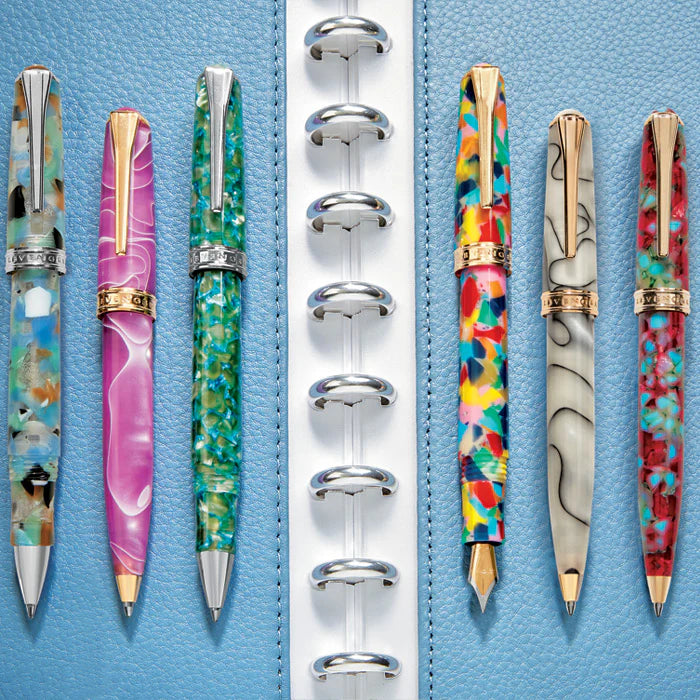
A thoughtful pen capsule lets you write beautifully in any setting—client meetings, lecture halls, cross‑country flights, or weekend journaling—without owning dozens of duplicates. This guide maps a clear path from your first dependable writers to a focused 5–10 piece collection you’ll use for years, with practical checkpoints, tradeoffs, and care tips along the way.
The Capsule Mindset: Fewer Pens, Better Choices
Treat your capsule like a toolkit: every pen earns its place by doing a job well. Aim to cover four writing moments—everyday notes, long‑form thinking, formal signatures, and travel backup. Add storage that protects finishes and a display that invites you to use what you own. Levenger pieces lean into craftsmanship—sometimes higher in quality and designed to be worth it over time—while still offering cost‑effective options, frequent deals, and a loyalty program that rewards steady upgrades.
Your First Three Pens (Strong Foundation)
- Everyday note‑taker: A reliable rollerball or ballpoint with easy refills. For a distinctive daily writer that balances comfort and presence, consider the house‑designed True Writer Classic Flora Pen, available in rollerball and ballpoint versions.
- Workhorse set for learning and gifting: If you’re exploring styles or buying for students and new professionals, a bundled duo accelerates the journey. The Faber‑Castell Sky Blue Grip Pen Gift Set delivers ergonomic control at a friendly price.
- Signature or journaling pen: For a richer line and expressive feel, step into fountain pens with a balanced starter. The Faber‑Castell Poly Fountain Pen and Ballpoint Gift Set pairs a smooth fountain writer with a ready‑anywhere ballpoint so you always have the right tool.
Not sure which writing type suits you best? See Choosing Your Everyday Writer: Ballpoint vs. Rollerball vs. Fountain.
- True Writer Classic Flora Pen — A reliable daily rollerball or ballpoint in the Flora line for comfortable everyday writing.
- Faber-Castell Sky Blue Grip Pen Gift Set — Ergonomic, refill‑friendly pens bundled as an affordable workhorse set ideal for learning or gifting.
- Faber-Castell Poly Fountain Pen and Ballpoint Gift Set — A mixed pen gift set that pairs a fountain pen for journaling with a ballpoint for everyday use.
- Retro 51 Literary Collection Peter Pan Rollerball Pen — A distinct, comfortable rollerball option for daily notes and a step up in presence and feel.
- Levenger Easy Flow Ballpoint Refills (set of 2) — Spare easy‑flow ballpoint refills to keep a workhorse pen writing through heavy use.
Decision Matrix: Pick by Feel, Care, and Context
Match pen type to how and where you write most. Use this compact comparison before you add the next piece.
| Type | Writing Feel | Maintenance | Refill Cost & Availability | Travel/Leak Risk |
|---|---|---|---|---|
| Ballpoint | Controlled, low‑smudge; great on varied papers | Minimal—swap refills | Low; widely available | Lowest risk; heat‑tolerant |
| Rollerball | Wet, smooth; darker lines | Low—cartridge swaps | Moderate; easy to source | Low–moderate; cap securely |
| Fountain | Expressive, customizable nibs/inks | Moderate—occasional cleaning | Low per page with bottled ink | Moderate; mindful flying |
Left‑handers and fast note‑takers can reduce smudging with the right line width and paper; see Left‑Handed Writing Tips: Smudge Control and Line Choice.
Refine to Five (Well‑Rounded Capsule)
- Travel pair, protected: For commutes and U.S. flights, carry two pens in different technologies so a dry refill never stalls you. A compact leather cylinder like the Bomber Jacket Pen Capsule cushions pens and stands upright as a small desk cup at your destination.
- Daily carry organizer: If you tote multiple writers, a soft wrap prevents clip scratches and keeps pens quiet in a bag. A lightweight sleeve such as the Canvas Pen Pouch is a budget‑friendly option for students and field work.
- Meeting‑ready presentation: For client‑facing roles, a tidy case doubles as a small platform for quick sign‑offs. The zip‑secure Leather Pen Folio organizes four pens and provides a 3×5 writing surface for notes and approvals.
- Ink and refills plan: Start simply with cartridges for fountain pens. When you’re ready for bottled ink’s economy and color range, use a compatible standard international converter; many Levenger and partner‑brand fountain pens include one in the box or accept one. For a deeper dive, explore Refills & Converters: Getting the Most from Your Levenger and Partner Brands and compare drying time and water resistance in Ink 101: Cartridges vs. Bottled, Drying Time, Sheen, and Water Resistance.
- Bomber Jacket Pen Capsule — A compact leather cylinder that cushions pens and doubles as a small desk cup for travel.
- Canvas Pen Pouch — A lightweight sleeve to protect multiple pens from scratches while stored or carried.
- Leather Pen Folio — A slim leather folio that organizes a small daily kit and keeps pens secure in a bag.
- Levenger Mini Pen Refills (set of 5) — Mini pen refills to ensure you won’t be stranded by a dried full‑size refill while traveling.
Nibs, Ergonomics, and Paper Pairings
As you add a second fountain pen, diversify by nib and body geometry rather than color alone. A fine nib is crisp for forms and small planners; a medium adds shading for letters; a broad can bring out sheen. Start with the Nib Selector: Fine, Medium, Broad—Line, Feedback, and Paper Pairings. If long sessions leave your hand tired, match pen diameter and weight to your grip using Ergonomics & Balance: Matching Pen Weight and Diameter to Your Grip. For paper that flatters your inks without feathering, see Paper Compatibility: Which Levenger Papers Love Fountain Pens.
Storage and a Small Desk Setup
Proper storage preserves finishes and nib alignment. Keep your current rotation visible and dust‑safe extras tucked away.
- On‑desk rotation: Display and access up to 30 pens in the wood‑veneer Pen Wheel; even if your capsule is just 5–10 writers, a carousel helps you see and use what you already own. For fountain‑focused desks, consolidate 3 pens in a felt‑lined drawer, 2 more on a matching stand, and inks/tools in dedicated cubbies with the cherry‑veneer Fountain Pen Studio.
- Convert a favorite mug: If you prefer a compact, playful holder, the foam Cuppa Pens Converter drops into a standard coffee cup to create a soft, tip‑safe organizer with five slots.
- Collector‑grade case: When your capsule grows beyond daily carry, move seldom‑used or heirloom pens into the Collector's Lock & Key Inlay Pen Case, which organizes and protects up to 40 pens behind a glass‑topped lid and locking inlay doors.
For arrangement ideas and ways to highlight favorite finishes, browse Presentation Matters: Cases, Stands, and Desk Display Ideas.
- Pen Wheel — A wood‑veneer carousel to display your rotation and keep extras visible and organized.
- Fountain Pen Studio — A compact atelier with felt‑lined cubbies for desk‑focused fountain pen storage.
- Cuppa Pens Converter — A foam converter that turns a mug into a playful, protective pen holder for daily use.
- Collector's Lock & Key Inlay Pen Case — A lockable case for archiving seldom‑used pieces and protecting valuable pens long term.
- Mini Pen Wheel — A smaller carousel option for compact desks that still displays a working rotation.
Maintenance Rituals That Extend Lifespan
A quick rinse every few fills keeps fountain pens writing like new. Schedule a monthly check: wipe threads, inspect clips and sections, and top up refills. See Maintenance Rituals: Cleaning, Flushing, and Safe Storage for step‑by‑step care, and bookmark Troubleshooting Flow: Skips, Hard Starts, and Scratchiness for quick fixes. If you’re sustainability‑minded, refilling rather than replacing is kinder to both budget and landfill—learn strategies in Sustainable Writing: Refill Strategies and Care for Decades of Use.
Going Beyond Basics
- Specialty writing: When you crave line variation, explore italics and flexible tips with guidance from Calligraphy & Special Nibs: When to Experiment and How to Practice.
- Flying and EDC: Air pressure and temperature shifts can affect ink. Pack thoughtfully and review Traveling with Pens: Flying, Leaks, and Everyday Carry before your next trip.
- Thoughtful gifting: Match finishes to personality and role with ideas in Gifts That Write: Matching Personalities to Pen Styles and Finishes.
Smart Budgeting: Where to Spend, Where to Save
- Spend on feel and fit: The pen that lives in your hand for hours deserves the ergonomics and nib you’ll actually enjoy using.
- Save on infrastructure: Bottled ink via compatible converters reduces cost per page; soft cases protect just as well as rigid ones for daily carry.
- Use promotions wisely: Levenger frequently runs seasonal offers, and Levenger Rewards lets U.S. customers earn points toward future purchases—use those to step up materials or finishes when it makes sense for you.
Frequently Asked Questions
How many pens make a good capsule for work and home?
Five covers most needs: one ballpoint (forms, travel), one rollerball (smooth daily notes), two fountain pens with different nibs (expression vs. precision), and a spare of your most‑used type. Expand only when a new task or feel isn’t covered.
Which nib should I choose for small U.S. notepads and planners?
Start with fine for compact grids and forms. Add a medium for letters and journaling. If you’re curious about line character, try a stub once you’re comfortable. See the Nib Selector for examples and paper pairings.
What’s the simplest way to travel with a fountain pen?
Carry one inked pen upright in a protective case and one backup ballpoint. Empty or top‑off before U.S. flights to minimize air‑expansion issues. A compact leather cylinder like the Bomber Jacket Pen Capsule adds impact protection; more tips are in Traveling with Pens.
How do I keep costs reasonable while upgrading?
Use a converter and bottled ink (when compatible with your pen), keep a small rotation, and add one purposeful upgrade at a time. Periodic promotions and Levenger Rewards can make premium materials and finishes more attainable over time.
Next Steps
Audit what you already own, fill the gaps using the matrix above, and set up storage that invites daily use. If you want a single standout to anchor the capsule, explore a distinctive everyday writer like the True Writer Classic Flora Pen. For a compact daily kit, pair a slim organizer such as the Leather Pen Folio with a durable travel case like the Bomber Jacket Pen Capsule. At your desk, start with a visible rotation using the Pen Wheel or a compact atelier like the Fountain Pen Studio. When your collection grows, archive seldom‑used pieces in the Collector's Lock & Key Inlay Pen Case so your favorites stay ready to write—and ready to inspire.
- True Writer Shell and Stone Pen Kit — A distinctive everyday writer kit that anchors a capsule with a durable, everyday pen.
- Wallet Writer — A slim, pocketable organizer that forms the backbone of a ready daily pen kit.


