


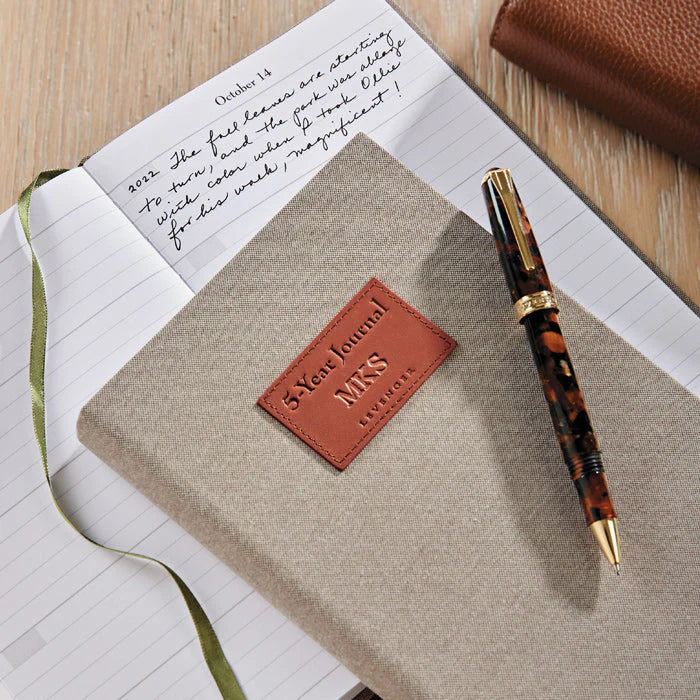
The fastest way to choose between monthly and weekly planner layouts is to match the view to how you actually plan: if you think in seasons and deadlines, choose a monthly agenda; if you juggle several commitments per day, choose a weekly—and if rigid boxes frustrate you, choose a freeform weekly or add undated daily pages for high‑density days. Levenger’s Circa system makes all three easy to combine without bulk, so you can tune your planner as projects and semesters change.
Start with how you think time
Before you fall in love with a pretty spread, answer three questions.
- How far ahead do you plan? Month‑at‑a‑glance is best for long horizons in the United States—quarterly goals, launches, school terms, and holiday travel. Week‑at‑a‑glance is ideal for balancing projects against personal commitments.
- How many commitments do you carry per day? A few meetings: weekly. Stacked calls and site visits: supplement with daily pages. A mix: pair monthly for direction with weekly for execution.
- Do you track habits and notes? If you journal, track workouts, or keep running task lists, you’ll want generous notes space—either a weekly with a notes column, a freeform weekly with dot‑grid backs, or undated daily pages when the day is packed.
Monthly vs weekly (plus daily support): which layout fits your planning persona?
- The Strategist (long‑range thinker): Choose a monthly agenda. Month spreads park deadlines, travel, and milestones where you can scan them in seconds—perfect for academic terms, fiscal quarters, and family logistics.
- The Plate‑Spinner (several moving parts each day): Choose a weekly planner. A Monday–Sunday or Sunday–Saturday view shows balance across work and home without forcing hour‑by‑hour entries.
- The Time‑Blocker (appointments and detail): Keep a small stack of daily pages handy. Use them only on heavy days so your planner stays trim.
- The Free‑Ranger (prefers open space): Opt for a freeform weekly with dot‑grid backs for sketches, project maps, and habit tracking.
Specs that matter: size, paper, capacity, and price
Levenger publishes real numbers so you can build confidently and compare like‑for‑like.
- Page sizes: Junior 5 1/2 x 8 1/2 in (140 x 216 mm) carries easily; SmartPlanner Junior 6 1/4 x 8 3/4 in (159 x 222 mm) offers a wider writing field; Letter 8 1/2 x 11 in (216 x 279 mm) is desk‑first.
- Paper weights: Weekly SmartPlanner pages use substantial 100 gsm, while many refills and pads—such as freeform weekly or planner pads—use smooth, fountain‑pen‑friendly 120 gsm.
- Disc capacity: 3/4 in discs hold up to 120 sheets; 1 in discs hold up to 150 sheets—enough to carry a year of weekly pages plus project notes, or a two‑year monthly plus extras.
- Price tiers (USD): desk‑friendly planner pads from about $19.50; freeform weekly refills around $13.65; two‑year monthly agendas often $37.50; comprehensive weekly agenda notebooks typically $59.50–$79.50. The live product cards below show current pricing.
How to match layout to your day count
- Fewer than 6 fixed commitments per day: A weekly spread keeps the signal visible without micromanaging. Add a monthly for long‑range context.
- 6–12 time‑stamped items per day: Use undated daily pages on heavy days so you have room for call notes and checklists, and a weekly or monthly for context.
- Highly variable days (creative, consulting, travel): Freeform weekly with dot‑grid backs lets you scale up or down and sketch itineraries or whiteboard ideas on the fly.
Monthly agendas: clarity at a glance
Monthly planners are for anyone who thinks in quarters, seasons, or semesters. They’re the best canvas for quarterly goals because you can ladder big outcomes into visible checkpoints. Most professionals in North America also appreciate how clearly a month grid surfaces U.S. federal holidays, school breaks, and billing cycles.
Portable two‑year monthly at‑a‑glance
Choose a compact two‑year view if you need year‑over‑year context for travel, grants, or editorial calendars and prefer to keep meeting notes on separate sheets.
- Lightweight control for long horizons: 2027–2028 Circa 2‑Year Monthly Agenda, Junior — it delivers a clear Monday‑start grid with four lines per day and shaded areas to track recurring priorities—easy to scan, easy to carry.
- Sunday‑start for family and community schedules: 2027–2028 Circa Sunday Start 2‑Year Monthly Agenda aligns with many school, faith, and community calendars while preserving notes on the back of each month.
Weekly planners: balance without the noise
Weekly is the sweet spot for most professionals and lifelong learners. You’ll see the arc of deadlines without logging every hour. Levenger’s weekly formats include classic ruled spreads, note‑rich SmartPlanner pages, and freeform boxes for those who prefer open space—each built on high‑quality paper that resists feathering and show‑through.
Weekly structure for meetings, priorities, and notes
Pick a weekly that reflects how you run the week: do you need embedded monthly pages and project notes, or a slim desk view that stays visible beside your keyboard?
- All‑in‑one weekly you can build around: Circa smartPlanner Weekly Agenda Notebook — it combines weekly and monthly views with durable discs and substantial paper—ideal as a primary planner.
- Desk‑permanent week view with extra‑thick paper: Weekly Margin Calendar parks under your monitor so deadlines are always in sight without taking notebook real estate.
- Open weekly with dot‑grid backs for thinkers and sketchers: Circa Weekly Freeform Planner Refill (100 sheets) — it offers daily boxes on the front and dot‑grid on the back for whiteboard‑style notes and meeting maps.
Daily pages: control of the clock (without carrying a brick)
If your day lives in time blocks—client sessions, billable hours, lab time—daily pages pay you back in focus. The trick is not to carry 365 at once. Levenger’s undated daily formats let you insert just a few weeks, so your Circa stays slim.
Daily support when workload spikes
Use undated daily pages selectively for heavy days, then archive. Pair them with a weekly or monthly for orientation.
- Quarter‑at‑a‑time control with room to breathe: Circa Daily‑Weekly‑Monthly Planner Refill blends 182 undated Daily pages with 26 Weekly and 6 Monthly spreads on smooth 120 gsm—perfect to build one quarter at a time.
- Pads that live on the desktop and start any Monday: Daily‑Weekly‑Monthly Planner Pad Trio — it gives you three undated 7 x 8 1/2 in pads (Daily, Weekly, Monthly), each with 50 sheets at sturdy 120 gsm.
Quarterly goals on paper (and why they work)
Quarterly planning balances ambition with reality. Here’s a cadence that fits any Levenger agenda—monthly, weekly, daily, or a hybrid.
- Set 3 outcomes for the next 90 days. Write them on your Monthly notes page or a blank sheet at the front of the quarter.
- Ladder milestones into the monthly grid. One per week is enough: submit proposal, run pilot, close report.
- Translate milestones into weekly focus. Use a weekly notes column to define the single lever for that week—draft section 1, rehearse deck twice, schedule user tests.
- Time‑block the heavy lifts. On daily pages, reserve 90–120 minute blocks for the lever work. Protect them like meetings.
- Review Fridays. On dot‑grid backs, run a quick retrospective: what shipped, what stalled, what to change next week.
Tools that make quarterly planning frictionless
These pieces let you step up or down in granularity without creating bulk. Use them to connect monthly milestones to weekly focus and daily time blocks.
- Freeform weeks that respect creative flow: Circa Weekly Freeform Planner Refill (100 sheets) gives you structure on the front and thinking space on the back.
- Undated daily pages you won’t waste: Circa Daily‑Weekly‑Monthly Planner Refill lets you use a daily page only when the day truly needs it.
What if you dislike rigid layouts?
You’re not alone. The honest answer is a mixed refill set: monthly tabs for navigation, a freeform weekly for rhythm, and dot‑grid or project pages for thinking. Levenger’s discbound Circa system makes this easy—rearrange sections as your projects evolve, archive finished months, and expand discs when you need more capacity. For paper performance and pairings by task, see guidance on choosing refills for notes, projects, meetings, and study.
Left‑handed, compact carry, and other ergonomics
Handedness, pen choice, and bag space all shape the best agenda for you. If you’re left‑handed or sensitive to notebook weight and page layouts, you’ll find practical tweaks in Accessibility & Ergonomics: Weight, Balance, Left‑Handed Tips, and Page Layouts. Junior size (5 1/2 x 8 1/2 in) fits most satchels and compact backpacks in the U.S. while still giving room to write; Letter anchors a desk in your home office.
Build your planner like a system
If you’re assembling your first setup or evolving a veteran notebook, you’ll appreciate the big‑picture walkthrough in The Complete Circa Productivity System. When it’s time to archive a quarter and refresh your agenda for January or July, use Maintenance & Refresh: Archiving, Rebuilding, and Seasonal Planner Swaps to keep your pages trim and relevant.
Real‑world examples by planning style
Examples make the choice concrete. Start with the primary view you’ll use most days, then add supporting pieces so you can zoom in without losing the month’s arc.
Consultant with 8–10 client calls per day
Carry undated daily pages for heavy days plus a monthly for hard deadlines. Keep 3–4 weeks of daily in your Circa at a time; archive the rest.
- Month‑over‑month visibility without bulk: 2027–2028 Circa 2‑Year Monthly Agenda, Junior keeps multi‑client milestones in view while leaving your notebook free for call notes.
- Daily focus only when you need it: Circa Daily‑Weekly‑Monthly Planner Refill adds undated daily pages for those stacked appointment days.
Manager running two teams
Use a weekly SmartPlanner for meetings and priorities; add monthly pages for release gates; and keep a freeform weekly stack for one‑on‑ones and retros.
- Weekly with embedded structure and monthly pages: Circa smartPlanner Weekly Agenda Notebook anchors the week with clear priorities and notes.
- Unstructured weekly space for coaching and follow‑ups: Circa Weekly Freeform Planner Refill (100 sheets) gives each report a flexible canvas.
Graduate student
Use a monthly for syllabus dates and conferences; a freeform weekly for reading plans; and dot‑grid backs for research diagrams and quotations.
- Semester‑long checkpoints that stay visible: 2027–2028 Circa 2‑Year Monthly Agenda, Junior organizes exam blocks and grant deadlines.
- Weekly boxes with dot‑grid backs for citations: Circa Weekly Freeform Planner Refill (100 sheets) captures reading notes and next steps.
Creative lead
Lean on a freeform weekly to sketch concepts; add project pages for campaigns; keep a light monthly to guard milestones.
- Open weekly that welcomes thumbnails and mood notes: Circa Weekly Freeform Planner Refill (100 sheets) keeps the week’s beats without cramping ideas.
- Desk‑side week view to protect deadlines: Weekly Margin Calendar lives between your keyboard and display so deliverables never hide.
Deals, value, and rewards
Levenger is known for higher‑quality materials—paper that resists feathering, discs that page smoothly, and covers that age gracefully—yet many items are more cost‑effective than you’d expect, especially refills and pad trios. Planner pads often start around $19.50, undated freeform weekly refills around $13.65, and a two‑year monthly in Junior around $37.50, with comprehensive weekly agenda notebooks typically $59.50–$79.50 (USD). Watch for sitewide events and seasonal offers; Levenger always has great deals running. If you plan to refresh your agenda quarterly, join the rewards program to earn points on every purchase and to receive early access to promotions—an elegant way to save on quality you’ll use every day.
FAQ
Is a monthly or weekly planner better if I manage both work and family schedules?
Most U.S. professionals find a weekly view best for day‑to‑day balance, supported by a monthly for long‑range context. If kids’ activities or volunteer work stack up on certain days, add a small stack of undated daily sheets for those high‑density days.
Should I choose a Monday‑start or Sunday‑start calendar?
Choose Monday‑start if you prefer the workweek grouped together; choose Sunday‑start if your week is anchored by weekend community or family events. Levenger offers both in monthly and weekly formats so you can match your rhythm.
What paper weight works best with fountain pens?
Levenger’s 120 gsm refills and 100 gsm SmartPlanner pages are designed to minimize feathering and show‑through, making them excellent for fine and medium nibs. Always test with your favorite ink to confirm dry time.
How many pages can my discs hold?
As a rule of thumb, 3/4 in discs hold up to 120 sheets and 1 in discs up to 150 sheets. That’s typically a full year of weekly pages plus notes, or a two‑year monthly with extras.
Can I mix monthly, weekly, and daily pages without creating bulk?
Yes. Build a quarter at a time: keep a two‑year monthly for orientation, 8–12 weeks of weekly pages, and undated dailies just for heavy days. Archive as you go.
What’s the easiest way to start mid‑year?
Use undated formats (freeform weekly, daily pages, and planner pads) so you can start any week. Then add a dated monthly for holidays and future planning.
How do I set up my planner for January efficiently?
Follow a simple reset: archive last quarter, insert the next quarter’s weekly pages, and refresh tabs and goals. For a step‑by‑step walkthrough, see How to Set Up Your Planner for a New Year.
Bring it all together
The right choice is the view you’ll actually use. If you think in seasons, start with a monthly; if you live in meetings, start with a weekly; if certain days are dense, add undated daily pages. Levenger’s higher‑quality materials make every page a pleasure, while the discbound Circa system keeps you agile and—thanks to frequent offers and a generous rewards program—surprisingly cost‑effective over time. Ready to find your fit?
- Choose your primary view now: Pick a monthly or weekly from the product cards above, then add refills as your work evolves.
- Personalize and gift with confidence: Many items support monogramming; allow an additional 2 business days for customized orders before shipping.


