


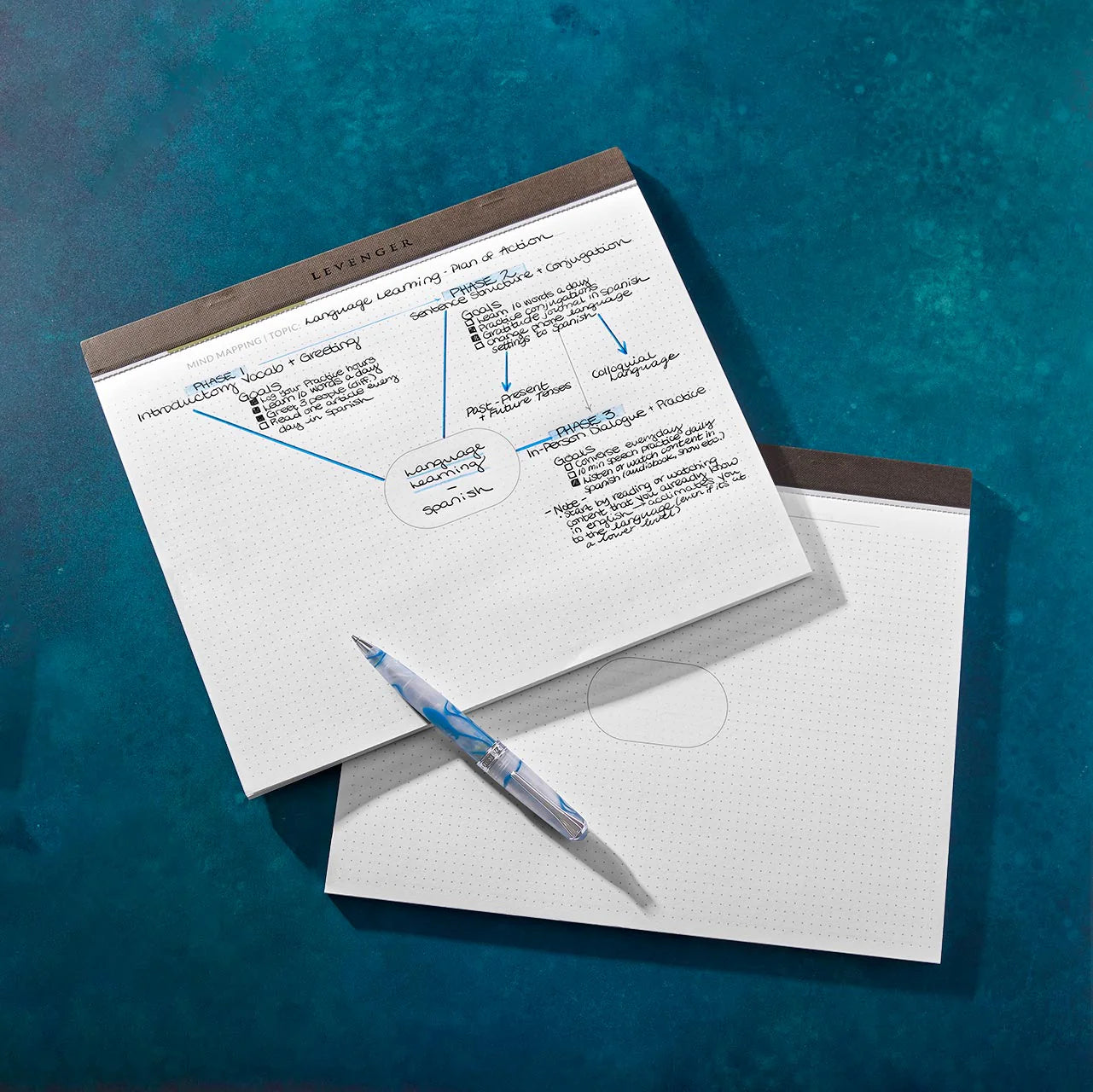
Start with a simple, undated, junior-size planner kit—about 5 1/2 × 8 1/2 in (140 × 216 mm)—loaded onto 3/4-inch discs with 60–100 sheets, 3–4 dividers, and one inbox pocket. Add a punch once the habit sticks and only then expand to specialty pages. It’s an elegant, cost‑savvy way to build a lifelong tool you’ll actually carry. Levenger’s Circa system is beautifully made, often more cost‑effective than it looks, and frequently discounted—so you can start strong without overspending.
If you’ve never used a paper agenda, this guide walks you from the shortest working setup to a confident, customized system. We’ll cover sizes, paper weights that love your pens, which dividers to use, what to skip, and how a punch turns your notebook into a life organizer. You’ll also find price‑tier guidance, personalization tips and lead times, and a manager‑focused variant for work.
Step 1: Choose your planner size (and carry fit)
Pick the smallest page that still gives you room to think. For most people in the U.S., that’s Junior; if you live at a desk or annotate U.S. Letter printouts, choose Letter. If you’re ultra‑mobile, Compact keeps weight minimal for errands and weekend carry.
- Compact: 3 3/4 × 6 3/4 in (95 × 171 mm), 7 discs. Ultra‑portable daily carry; writing space is tight.
- Junior: 5 1/2 × 8 1/2 in (140 × 216 mm), 8 discs. The balanced everyday agenda—fits most bags while offering full‑width lists and meeting notes.
- Midway: 7 × 9 1/4 in (178 × 235 mm), 9 discs. More canvas without full Letter bulk.
- Letter: 8 1/2 × 11 in (216 × 279 mm), 11 discs. Best if you integrate printed project docs and agendas.
Commuters and travelers in North America: Junior balances table‑tray meetings, small café tables, and quick airport edits. Keep a larger Letter book at your desk for project archives.
Still weighing the investment? A clear, practical breakdown of starter, mid, and premium builds lives here: what you get at each price tier.
The first planner itself — cover, discs and pages in one order
- The least‑risk way to start, in either size: Circa Discbound Notebook Starter Kit — cover, discs and a stack of pages together in Junior or Letter, so nothing is missing on the first morning.
- A cover you will still want in three years: Circa Modern Sliver Discbound Notebook — Junior for the balanced everyday size, Letter if you file punched documents; debossed initials are an option if you want it to feel like yours.
- A dated week‑to‑view already built for you: 2027 Circa smartPlanner Weekly Agenda Discbound Notebook — a ready‑made weekly system in Junior or Letter, for anyone who would rather not assemble pages before they have a habit.
- Start in any month, with no calendar year to waste: Circa Start‑Anytime Visions smartPlanner Agenda — undated planning pages in Junior or Letter, which is what keeps a first planner from stalling in February.
Step 2: Dated or undated? Start undated to remove the “I missed January” problem
First‑time planner users often stall when a dated book sits untouched for a week. Undated pages let you start any day, skip a slow month, and resume without guilt. Load only what you’ll truly use in the next 2–4 weeks; you can always add more.
Starter refills you can begin today
- Daily focus without commitment: Circa Vibrant Daily Planner Refill (366 sheets)—add a week or two at a time so your planner stays slim and you only carry what you’ll use.
- Try daily/weekly/monthly on your desk first: Daily‑Weekly‑Monthly Planner Pad Trio—undated tear‑off pads for experimenting with cadence before you assemble inserts.
Prefer to test at your desk in the U.S. workday rhythm (9–5, Monday starts)? Use the pad trio to discover whether your mind prefers a weekly sweep or day‑by‑day coaching before you commit to discs.
Step 3: Pick paper that matches your pens (gsm matters)
Paper weight is measured in grams per square meter (gsm). Levenger’s everyday ruled refills use substantial 90 gsm stock—ideal for pencil, ballpoint, and most gel inks with minimal show‑through. Specialty formats and goal pages often step up to 100–120 gsm for wetter inks and double‑sided use, a thoughtful touch if you prefer rollerballs or fine fountain pens. The result: fewer distractions, more thinking.
- Ballpoint (0.7–1.0 mm): Crisp on 90 gsm; essentially no bleed‑through.
- Gel (0.5–0.7 mm): Smooth on 90 gsm; choose quick‑dry inks if you write small or are left‑handed.
- Rollerball (0.5–0.7 mm): Fine on 90 gsm; very wet inks benefit from 100–120 gsm.
- Fountain pen: Fine and extra‑fine nibs behave on 90 gsm; broader nibs and saturated inks shine on 100–120 gsm “fountain‑pen‑friendly” stock.
Global teams and A4 content
- Dot‑grid pages that play well with sketches and global docs: Freeleaf International Dot‑Grid Pads (A4/A5 mix)—punch notable pages into your Circa to keep international collaboration tidy.
Step 4: Dividers, pockets, and the minimal layout
Start with four sections: Calendar, Tasks, Projects, and Notes. Add one pocket up front as your “inbox” to corral receipts, meeting handouts, and to‑process cards. Keep it spare—too many sections make capture harder and slow page turns. Build breadth after you build the habit.
Tabs and pockets that grow with you
- Alphabetize clients or index topics: Circa A–Z Tab Dividers—file meeting notes fast by client, initiative, or theme.
- Pocket capacity for receipts and quick‑grab items: Triple‑Decker Pocket (Planner)—a slim way to stage business cards and travel stubs without adding bulk.
Step 5: Why a punch changes everything
A punch is the lever that turns “nice notebook” into “personal system.” It lets you integrate meeting printouts, travel itineraries, course syllabi, and your own templates—no glued pockets or drifting loose pages. Choose a model based on frequency and volume.
Punches for home, office, and project sprints
- Desk‑friendly for occasional punching: Circa Universal Discbound Notebook Desk Punch—a compact, precise option for a few sheets at a time when you’re building pages as you go.
- Batch power for project packets: Circa Leverage Discbound Notebook Punch—the easy lever action makes quick work of multi‑page handouts and checklists when you’re assembling a full quarter’s workflow.
For travel workflows and airport‑proof carry strategies, see Circa for Travel: Airport‑Proof Kits. It pairs well with a minimalist planner loadout on 3/4‑inch discs.
Step 6: Discs and capacity—how thick should your agenda be?
Disc diameter controls how many sheets you can carry. A lean planner is easier to use, so start small and size up only when you consistently need more pages. As a working rule of thumb, 3/4‑inch discs handle 60–100 sheets comfortably; 1‑inch is a good ceiling for a carry‑everywhere book, and 1 1/2‑inch turns your planner into a desk‑first project hub.
Discs that balance capacity and elegance
- Refined capacity for everyday carry: Matte Aluminum Circa 1" Notebook Discs (set of 11)—a durable upgrade that keeps turns smooth when your pages grow beyond the starter set.
- Lightweight style with easy turns: Modern Circa Notebook Discs (set of 11)—1" holds up to 120 sheets; 1 1/2" is ideal for 150–185‑sheet project builds.
Your shortest working kit (start here)
This is the nimble setup that gets you planning today. It favors velocity over perfection and keeps replacement costs modest while you learn what you reach for most.
- Size: Junior (5 1/2 × 8 1/2 in) for everyday carry and U.S. bags and folios.
- Discs: 3/4–1 in to keep page turns easy and weight down.
- Pages: Four weeks of undated daily or weekly plus the current month; 20–40 ruled sheets for notes.
- Dividers: 3–4 tabs labeled Calendar, Tasks, Projects, Notes; add more only after a month of use.
- Pocket: One front pocket as an inbox for receipts and business cards.
- Pen: A 0.5–0.7 mm gel or your favorite ballpoint; move to 100–120 gsm sheets for broad fountain pens.
Ready‑to‑use pages that drop into the kit
- Daily structure with room to think: Circa Vibrant Daily Planner Refill (366 sheets)—load a week at a time to keep your book trim while you experiment.
- Find your natural cadence first: Daily‑Weekly‑Monthly Planner Pad Trio—test daily vs. weekly at your desk, then migrate the winner into your Circa.
What to add once the habit sticks (weeks 3–6)
After a month of reliable use, add structure where you feel friction. The best additions nudge your follow‑through without bloating your carry.
- Monthly goals: One sheet per month to log targets, wins, and lessons learned.
- Project templates: A consistent page for actions, owners, and deadlines makes weekly reviews faster.
- Capture cards or dot‑grid sheets: For whiteboard‑style thinking you can punch and file later.
Structured planning tools that slot right in
- Three complementary formats to tame tasks: Circa Think • List • Plan Pad Trio—use as a staging ground, then move the keepers into your planner sections.
- Alphabetized indexing when your client list grows: Circa A–Z Tab Dividers—turn messy notes into a browsable archive you’ll actually revisit.
What to skip (for now)
- Too many specialized inserts: Stick to one calendar view and ruled or dot‑grid notes until a clear friction emerges.
- Oversize discs on day one: Big discs encourage hoarding unused pages, which makes page turns clumsy.
- Every divider under the sun: Four thoughtful sections beat twelve rarely‑touched tabs.
Using your planner with travel and meetings
For airport days, pack only your current week, an inbox pocket, and a few notes pages; heavy project sections can live in a second notebook at home or the office. For smart packing and checkpoint‑proof carry, see Circa for Travel: Airport‑Proof Kits.
Interviewing or presenting? Pair your agenda with a professional folio for a composed arrival and faster setup. For a fair breakdown of when to carry a slim padfolio versus a larger portfolio, see Padfolio vs. portfolio.
Paper alternatives and companion tools
Variety keeps momentum. Mix ruled pages for verbatim notes with dot‑grid for mapping and lists. Add pockets for artifacts you’ll need later.
- Ruled everyday pages for most pens: Choose 90 gsm for light carry and plentiful space per disc.
- Specialty formats for wet inks: Step up to 100–120 gsm to reduce show‑through and improve two‑sided use.
- Dot‑grid and bullet‑style layouts: Helpful for sketches, timelines, and quick mind maps.
Inbox and section tools that punch above their weight
- Pocket dividers that also sort: Circa Clear Discbound Notebook Pocket Dividers (set of 4)—double‑sided storage that doubles as section markers.
- Color‑coding without visual clutter: Circa Modern Discbound Notebook Pocket Dividers (set of 4)—subtle hues cue topic or priority at a glance.
Work‑focused variant (manager or team lead)
Keep your personal agenda slim and create a second, work‑only book that lives on your desk or travels to client meetings. Use 1‑inch discs and a standing set of project templates. This separation reduces context switching and makes Friday wrap‑ups cleaner.
- Sections: Weekly Overview, Team 1‑on‑1s, Projects, Follow‑ups, Reference.
- Weekly rhythm: Monday set priorities; midweek review blockers; Friday ship list and notes to your digital system.
- Pages: Undated weekly + daily that supports action items, meetings, and follow‑ups.
Manager’s quick‑add building blocks
- Simple weekly cadence with room for rollups: Daily‑Weekly‑Monthly Planner Pad Trio—stage a week’s priorities, then move actions into your book.
- Refill for fast task triage: Circa Think • List • Plan Pad Trio—a paper “control tower” when your day runs on checklists.
Comparing systems fairly
What sets Levenger apart is thoughtful paper and build quality across sizes, an unparalleled range of discs and dividers, and powerful punches that invite customization. Add frequent promotions, a generous rewards program, and well‑timed site‑wide deals, and the lifetime cost is often lower than you expect—especially because quality sheets turn both sides into usable space. Levenger is sometimes more of an investment up front and but worth it over years of daily use; it’s also surprisingly cost‑effective on many items, and Levenger always has great deals rotating through the site.
Curious about spend levels for a first build vs. a long‑haul kit? Explore a pragmatic breakdown at Is Circa worth it? What you get at each price tier.
Price tiers and real‑world budgets
Here’s how U.S. shoppers typically begin, with exact current catalogue prices for representative pieces (the product cards below will show live pricing if included). Use this as a map, then pick the pieces that match your work and carry.
- Under $25—lightest on‑ramp: Circa Discbound Notebook Page Finder (set of 2) $7.50–$9.50; Circa Clear Discbound Notebook Pocket Dividers (set of 4) $7.85–$17.50; 100 3 × 5 Dot Grid Cards $19.50.
- $25–$60—core pages and a starter kit: Circa Discbound Notebook Starter Kit $21.50–$26.50; Circa Things To Do Discbound Refill (100 sheets) $24.50–$27.50; 2027 Circa Modern smartPlanner Weekly Agenda Refill $39.50–$59.50.
- $60–$120—capacity and carry upgrades: Circa Luxe Leather Discbound Notebook $89.75–$169.50 (varies by size/configuration); Andromeda Circa Notebook Discs (set of 11) $36.50; Matte Aluminum Circa 1" Notebook Discs (set of 11) price as listed on product page; Bomber Jacket Circa Zip Pro Folio $169.50–$189.50.
- $120+—the long‑haul workstation: Circa Leverage Discbound Notebook Punch (see product card for current price) and a larger disc set like Modern Circa Notebook Discs (1 1/2") $36.50–$39.50 for archive‑ready capacity.
Tip: Prices above reflect current catalogue ranges; the site often runs promotions and offers Levenger Rewards points, making higher‑quality choices even more approachable over time.
Personalization, gifting, and lead time
Monogramming a cover or folio turns a useful tool into something personal. If you’re gifting or branding a kit for a new role, allow two additional business days for personalization before shipping, and consider including a simple note that explains how to add and remove pages. For under‑$50 gifts, pair a slim refill with a page finder and a pocket divider; for $50–$120, add a disc upgrade and undated monthly pages; above $120, include a punch so they can integrate handouts and checklists from day one.
For the enthusiast who owns everything already
When your shelves already hold the classics, the next leap isn’t more stuff—it’s better flow. Build a two‑book system: a light daily carry and a standing desk binder. Use 1" discs in the daily and 1 1/2" at the desk; once a week, migrate finished notes and completed project sections from the carry book into the desk binder. Add a page finder to both so switching contexts is instant. Your punch becomes the switchboard: travel outlines, team retros, and reference lists live on printed templates you can update and re‑file.
Upgrade pieces that streamline a seasoned system
- Fast capture in motion: Circa Discbound Notebook Zip Pockets (set of 2)—stage receipts, boarding passes, and action cards without losing them between gates or meetings.
- Desk‑first archive discs: Modern Circa Notebook Discs (set of 11)—use 1 1/2" for quarter‑long project sections and finished briefs that need to ride along for reference.
When capacity isn’t the issue—clarity is
Run a weekly horizon scan: one page for “Next Week,” one for “Blocked/Waiting,” one for “Wins.” Keep each to five lines. A second book dedicated to team 1‑on‑1s lets you show up prepared and close loops quickly. For offsites or creative sprints, go analog on purpose—pack a lean kit and step away from screens for a weekend; see Digital Sabbaticals: Packing a Weekend Bag for Offline Clarity for ideas.
FAQ
- What’s the single best size for beginners? Junior (5 1/2 × 8 1/2 in) balances portability with room for notes and fits common bags and folios in the U.S.
- How many sheets should I carry? 60–100 sheets on 3/4‑inch discs keeps your planner nimble; upgrade to 1‑inch if you consistently need more.
- Do I need a punch right away? Not to start. Add it when you’re ready to integrate handouts or your own templates; that’s when Circa truly becomes a system.
- Is undated really better for a first planner? Yes—undated pages eliminate restart guilt, help you discover your natural planning cadence, and keep the book slimmer.
- What paper works with fountain pens? For fine nibs, 90 gsm is often fine; for wet inks or broader nibs, look for 100–120 gsm stock.
- Can I mix A4/A5 pages with U.S. Letter/Junior? Yes—punch A4/A5 pages from dot‑grid pads and file them in your U.S.‑sized book; keep section tabs sized to your main page size to protect edges.
- What about deals and rewards? Levenger frequently runs promotions and the Rewards program helps your investment go farther—watch the site’s Sale and Clearance sections and stack points over time.
Ready to build yours?
Start lean, then evolve. Choose Junior, load a month of undated pages, add three dividers and a single inbox pocket, and carry it for two weeks. When you’re reaching for it daily, add a punch and the discs that fit your pace. Levenger’s quality pays you back in focus and longevity—and with regular deals and Rewards, it’s a smarter long‑term value than you might expect.


