


For those of us over the age of 55, it’s hard to imagine that many of today’s young people don’t know how to mail a letter. It’s not their fault. They didn’t grow up in a world where physical letters could alter the direction of your life—a college acceptance, a job offer, a love letter. For young people today, stamps and envelopes have been replaced by emojis and send buttons. That’s why it’s important for those of us old enough to remember how emotive physical letters can be to send them to the young people we care about.
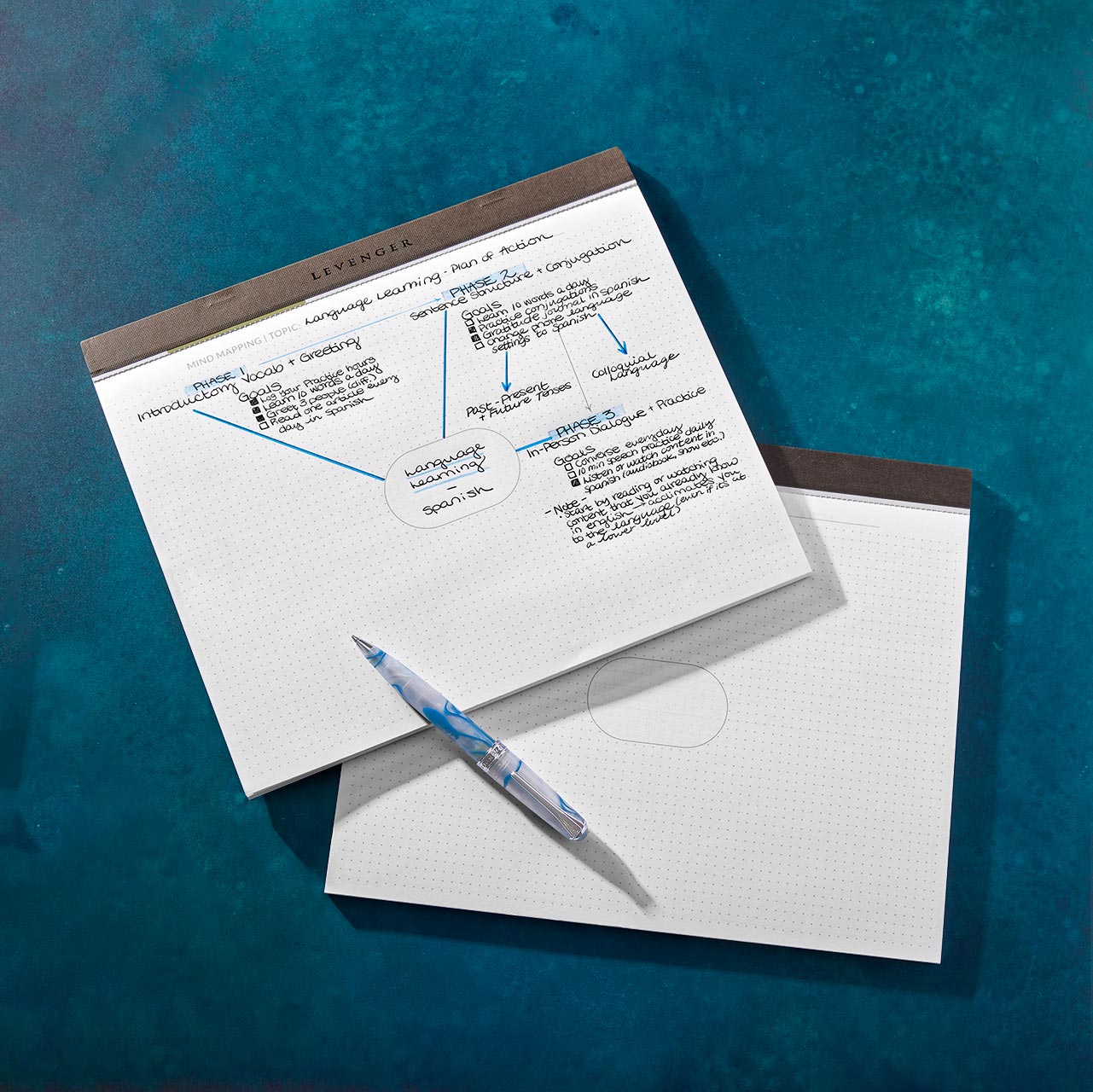
Another practice that’s on the endangered behavior list is taking notes by hand on paper. The practice does seem obsolete compared with digital recording devices, but taking notes by hand on paper holds hidden powers.
Better conversations
The first power a pad of paper and pen contain has nothing to do with what you write down. It’s the simple presence of these comfortable, old-school products together with the absence of smartphones. Smartphones can kill a conversation just like that. Even face down on a table, our phones whine, squirm, and fuss. Like an untended baby, they interfere with listening attentively to someone else. Active listening, devoid of phone, is a gift we give our fellow humans that can seem increasingly rare. (For compelling accounts on how smartphones can derail human connection, see The Village Effect by the social psychologist Susan Pinker and Reclaiming Conversation by the sociologist Sherry Turkle.)
Conversations between friends are often peppered with suggestions for checking out a particular book or movie or video. It’s tempting to pick up our phones to get that dopamine hit immediately. The trouble is, when we have our phones, they have us. Even if our conversation partners can’t resist focusing on their screen, thumbs a blur, we can be the ones who, instead, jot a note on paper, while saying, “Thanks, I’ll check it out!” We can be the more mindful adult who gives the gift of attention to our fellow humans, especially to the young people in our lives who may not have witnessed such old-fashioned social behavior.
It’s no wonder that many psychologists still use paper pads to take a few notes, striking that optimal balance between being perfectly attentive to their patients, while also capturing a few key words and phrases that will aid their recall later.
A conversation with yourself
Even when we’re alone, paper and pen can be better company than a screen, especially if you’re working on something original, requiring your focused attention. After years of focusing only on the speed and ease of typing versus writing by hand, researchers are now seeing that the slower process of writing by hand can deliver cognitive benefits, enhancing learning and memory. We are also learning that the power of our digital devices to inform us is hard to separate from their power to distract us. The digital dagger cuts both ways.
Now is the time to model for young people what we have experienced in our longer lives—that there are situations when we do better with the peace of paper, the simplicity of a pen or pencil, connected via our thoughts to our hand that shapes letters, draws arrows and diagrams, crosses things out, writes again. For centuries, humans have built the civilization we now enjoy by using such heritage tools.
AI can be a powerful collaborative device, but there is a time when we need to be alone with our thoughts and the comfort food of paper and pen.

Steve Leveen, Co-Founder